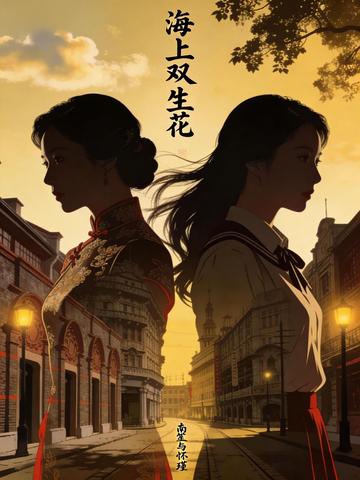
In 1923, under the crabapple tree in Shanghai, five-year-old Shen Zhi'an and six-year-old Li Qiaoqiao formed a sisterhood vow. The phrase "We share blessings and share hardships" actually predicted their half-life war journey.
Fourteen years later, a wealthy daughter who returned to study abroad and a female cotton mill worker reunited at the Bund Pier. The begonia tokens exchanged were still warm, and the country was in crisis. Zhi'an set up a textile factory in Hong Kong to cover the transfer of materials, and Qiao Qiao set up a secret intelligence station in a Shanghai tailor shop. The crabapple flower has since become the secret code of the two cities - secret electricity is hidden in the petals, medicine is sandwiched in the fabric, and messages of life and death are conveyed between the buttons of the cheongsam.
This is not a front line filled with smoke, but a secret war surrounded by dangers. When the Yangshupu warehouse burned in an explosion, when a Macau banquet hid a fatal trap, and when the warning to "be careful of those around you" came quietly, they walked on thin ice between betrayal and loyalty. After fourteen years of separation and eight years of war, from the Jia Fei Road Cafe to the late night at Victoria Harbor, the two women used needlework, telegraph machines and undying faith to weave a shocking network on the back of history.
Begonia blooms season after season, witnessing how the beauties in troubled times can rewrite the war situation with their flexibility, and how sisterhood can transcend class, war and life and death tests. When the dawn of victory finally illuminated the Begonia tree, they discovered that some agreements were tougher than war; some flowers bloomed most beautifully on the ruins.