In the middle of the eighth century AD, after the An-Shi Rebellion, Chang'an West City was still the melting pot of Silk Road civilization. Eighty-year-old doctor Mu Jiachen and Taoist doctor Zhang Gengzi jointly run the "Ci Shi Medical Hall". They combine medicine and needles, regardless of where the patient comes from. Hu Shang's emergency attracted the attention of Wudang female disciple Ma Lindan and returning young man Hassan, and also touched the aloof heart of Li Mingyue, the son of the imperial envoy. Opposite the medical hall, the sound of reading "Ming De Meng Xue" could be heard. Children of all ethnic groups read the classics and learned kindness together.
In the past five years, the plague and snow have tested benevolence, and civilization and wisdom have compiled a medical code; the actions of caring for students have demonstrated great love, and the ecological medicine garden has witnessed symbiosis. From the inter-religious free clinic to the completion of the Wanfa Medical Hall, from the childhood of Mongolian education to the recognition of the imperial court, the seeds of tolerance have taken root and sprouted in Xishi. Love is frozen under the moonlight of Huashan Mountain and continues in the acupuncture method. In the end, Chang'an's tolerance is no longer just a legend, but has become a picture of "harmony in the world" painted by thousands of mortals - doctors, teachers, believers, businessmen, students - with their daily benevolence.
Medical knowledge has no boundaries, and benevolence has no boundaries. This story is about how ancient Chang'an embraced the colors of the whole world with its big heart.
Reader comments
In Xi City, Chang'an in the middle of the Tang Dynasty, Cishi Medical Hall inherited the mantle of traditional Chinese medicine.
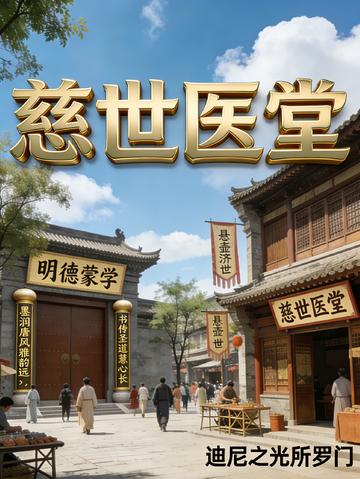
In Xi City, Chang'an in the middle of the Tang Dynasty, Cishi Medical Hall inherited the mantle of traditional Chinese medicine.