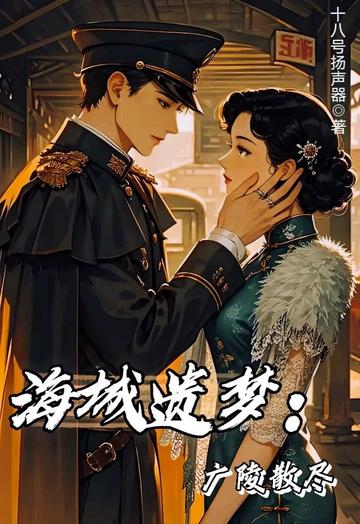
Haishi, 1935.
Neon lights float on the night water in the concession, like a dream that refuses to wake up. The undercurrent in Haicheng is turbulent, and artillery fire is approaching, but the sound of the piano in Zuiyue Tower is still gentle, as if it can heal the cracks in the entire troubled world.
She is Lin Qingling, a down-and-out daughter from a scholarly family in the south of the Yangtze River. She was sold into a brothel at the age of sixteen. Music, chess, calligraphy and painting are her cover; photographic memory is her weapon. A song "Guangling San" plays about the wind and moon, and hides the blood and tears of family and country.
He is Huo Li, a young marshal from a warlord family. He traveled east to Fusang to study, but when he returned he saw that the mountains and rivers were about to collapse. He put on the iron armor of a military governor and circled among the great powers. He looked ruthless on the surface, but there was a fire burning in his heart - to protect the city and the people, waiting for a true awakening.
A game of chess, a stunning sight. She held her hand under the lamp while he stared in the dark. They got close through lies and got to know each other through temptations. A pocket watch with a compass hidden in it, and a handkerchief embroidered with Morse code are both a sign of love and a foreshadowing of fate.
But when the country is in crisis, the love between children must give way to the righteousness of mountains and rivers.
She fell before dawn, her blood staining the street. And the information she sent ignited the entire resistance against the enemy.
This wet dream is not an illusion, it is the light ignited by thousands of nameless people in the long night.
She never saw the dawn,
But her name,
Has been carved into the dawn wind.