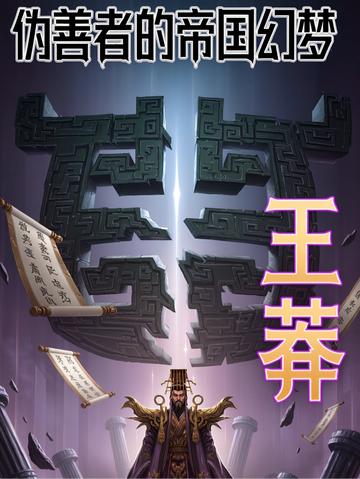
Using "mandate of destiny" to deconstruct the controversy over the legality of his seizure of power, and using "paradox" to highlight the tear between his ideals and reality, the introduction focuses on Wang Mang's identity transition and destiny contrast from Confucian scholar to emperor, taking into account both historical background and narrative tension:
# Introduction to the work: "Destiny and Paradox"
He was a son of a maternal relative who "hid his love and sought fame" in the "Book of Han", and was famous for his courtesy, thrift and filial piety. He was also the only "usurper" in Chinese history who ascended to the throne through abdication and established the "New Dynasty" that only lasted fifteen years. Wang Mang's life is the ultimate interweaving of the myth of destiny and the paradox of reality.
In his early years, he devoted himself to Confucianism, dissipated money and attracted customers, and stood out among the sensual Wang family members. With the recommendation of his uncle and the praise of celebrities, he climbed up the ranks step by step, turning "virtue" into the sharpest political weapon. After ascending to the throne, he took the restoration of ancient times as the banner, promoted the well-field system, and reformed the currency system, hoping to bring the troubled world back to its knees. However, he eventually lost touch with reality and acted too hastily, leading to great chaos in the world.
He longed to reconstruct order with Confucianism and Taoism, but he was trapped in the whirlpool of power. He wanted to use "the destiny" to rectify his name, but was eventually abandoned by the destiny. This non-systematic historical novel follows the historical context of the "Book of Han", strips away the labeled narrative of "hypocrite", and restores in details a complex soul that combines idealism and power ambition, diligence and paranoia. When the reform blueprint comes to naught, when the support of the people turns into a mass attack, Wang Mang's tragedy is, after all, a paradox of the times and a paradox of human nature.