Liu Yao, a historical researcher, traveled to a clan in the late Han Dynasty, and when he opened his eyes, he saw Hu Qitu Village. There are no system plug-ins, only organizational charts and social system models in my head.
Seeing the bloody future of Wu Huan Hua, he was determined to reshape the rules of this troubled world.
He used the "division of labor and points system" to make the refugees operate efficiently, and used the "standardized process" to mass-produce weapons.
What he showed Zhao Yun was not loyalty, but the "Outline for Training Officers"; what he showed to Zhao Yun was not a blank ticket, but the "Trial Regulations for the Imperial Examination".
Cao Cao is still coercing the emperor to order the princes, and his "White Paper on National Integration" has made the Xiongnu Chanyu a "model of Hanization."
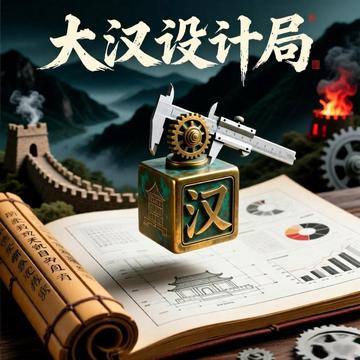
While the princes were competing for the jade seal, his "Design Bureau" had already produced the "Fortress Defense Manual" and "National Epidemic Prevention System". The world finally discovered that this border force was not fighting for the city, but was redefining the world with a set of incomprehensible "systems".
Gungun Huqi headed south, and what he encountered was no longer a piece of loose sand, but a war civilization armed to the teeth and mobilized to the roots.
Liu Yao stood on the top floor of the "Civilization Design Administration" and smiled at history:
"Five Huanhua? That's an old script."
"Welcome to the New Han Era, which I designed with an institutional blueprint."
Reader comments
It's good to read, and it's different from previous Three Kingdoms novels, both in terms of perspective and plot.
It's good to read, and it's different from previous Three Kingdoms novels, both in terms of perspective and plot.
Not bad, a farming article worth reading