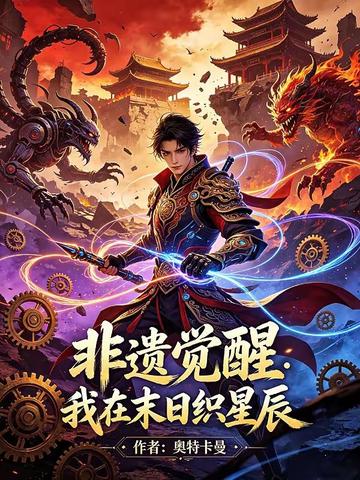
Awakening of Intangible Cultural Heritage: I Weave Stars in the Doomsday
非遗觉醒:我在末日织星辰
- Status
- Ongoing
- Length
- 1.4M Words
- Genre
- Sci-Fi & Apocalypse
- Audience
- Male
- Updated
- 5d ago
- Source
- Fanqie
Stats
Tags
Synopsis
Reader comments
In booklists 18
Spy War! Spy War! Spy War! Spy War! Spy War! It's a Spy Game!
Spy war!



Crossing Nezha 2
Time Traveling through Nezha 2: Beating Wuliangshou Tao
Is There Anything Else I Can Watch About Spy Wars Besides Barbed Wire?
I want to read a book similar to "Spy War: I Can Actually Recognize Spies (Spy War: Jedi)".
An In-Depth Article That Can Be Called a Masterpiece
Just like the three-body
Please Write a Passionate Article, One That Will Never Regret Entering China in This Life, One That Will Shock People's Hearts!
Thank you
Burning, Superpower. . . .
Grand World View, Extraordinary Genre, Rich Plot
I want to read a book similar to "Beyond the Gray Mist: The Mysterious Throne".
Those Who Want to Watch Warhammer, Want to Watch Something More Exciting😭😭😭
I want to watch Warhammer 40k and travel to other worlds or survive in the capital city. I have seen a few but they haven't been updated yet. Especially the one about playing Souda in Warhammer 40k is very interesting. I want to see more 😭😭😭😭😭

9.9 Points, Super Beautiful, Can't Stop Watching It
I want to watch content similar to "Wanwan is not Wanwan: Who still loves you after being reborn".
On the Charm of Group Portraits! Burst! !
I want to read a book similar to "I asked you to take over the throne, but I didn't ask you to create a new world". If you refuse, I will apply to fight
Just one word, burning! ! ! I'm not being submissive. I don't need to say more about the rest. Everyone here understands it, right? Make my blood burn
High Burning, High Burning! ! Passionate and Burning! !
The plot is high-octane, neither witty nor brainless, the same stance, different approaches, no harem! It will ignite the blood! !
The Protagonist Has Strong Faith and Will, and Has Justice in His Heart
The protagonist has strong faith and consciousness, and has a righteous heart. The supporting characters and villains are also clever. It is no longer a boring and boring novel, but a spiritual food that can fill people's hearts with faith and spirit.
If You Don't Believe That Tomato Has a Masterpiece with Profound Thoughts, Grand Structure and Epic Feeling
I haven't found any novel like this so far
Group Portrait! ! ! ! ! ! !
Group portraits, I need group portraits, I need completed group portraits of hot-blooded teenagers, I need group portraits where everyone is important, I need group portraits from the female protagonist's perspective, I need group portraits without CP (screaming) (roaring) (grabbing the vines) (swinging around in the woods)
Group Portrait Article, Group Portrait!
Is there really no suitable group portrait article? After being attracted to the protagonist, I find that the protagonist is surrounded by people who are attracted to the protagonist. In the end, all of them have a happy ending. Is there such a thing? Beg on your knees!
Group Portrait! Crazy for the Group Portrait! It's Best to Be Someone Who Is Passionate About Fighting and Has Brains.
Group portrait! ! I'll come first, Lin Du, Jiang Lin, Norvia, Li Wenyin,
# I Work on KPI in Shenxian Bureau
I want to see content similar to "Liaozhai Tax Refund Department: Little Fox Fairy's KPIs and Moonlight Ledger". Help! Aren't today's gods too curly? ! 😱 The underworld is engaged in KPIs, and the underworld is assessing performance. Even the little fox fairy has to work hard to keep his job! This is a
The most touching core of this book - when the doomsday devours everything, memory becomes the last and highest battlefield. Shen Xingcha used Su embroidery as his sword and facial makeup as his armor, and used five thousand years of patterns to fight against the nihilistic philosophy of "forgetfulness is eternity". The ultimate showdown between master and apprentice is not only a battle of combat power, but also a soul torture of the meaning of existence: Which one is closer to salvation, "living" or "remembering why you live"? When intangible cultural heritage is transformed into a magical weapon, and every battle is filled with blood, this is a truly doomsday epic with roots and soul.
We always think that we must rely on technology to survive in the apocalypse, but this book gives the most amazing answer: Intangible cultural heritage is the last line of defense for human civilization. When high-rise buildings collapse, signals are cut off, and when all modern creations are reduced to scrap metal, those intangible cultural heritage that we regard as "old craftsmanship" become the only light to illuminate the darkness. The star pattern in Sanxingdui is no longer the silent pattern in the museum, but a talisman that can withstand disasters; the warp and weft of the fingertips are no longer ordinary fabrics, but the lifeline that can weave the galaxy. The author writes about the intangible cultural heritage passionately and affectionately with cyber-national style, allowing us to understand the fire of civilization engraved in the national genes.
5-Star review. Very interesting. I think it's worth reading. If you don't read it, you will regret it for the rest of your life. It's very interesting. It's a novel novel. You can definitely read it. This is a work that stayed up late to catch up on updates. The author's imagination is wide-ranging and the characters are described with vivid scenes and details. Breaking through the traditional framework, the main and branch characters are clearly and vividly created, and the concept of the structure from the small self to the big self has jumped up. This book made me immersed in it. The plot had ups and downs and the characters were vividly drawn, as if they were vividly written on the page. It not only brought me endless imagination, but also gave me profound insights. Every page is full of surprises and is worth reading again and again. It is a five-star review and highly recommended!
The writing method that combines Chinese intangible cultural heritage with apocalyptic science fiction is particularly eye-catching. The Liangzhu emblem and Peking opera facial makeup are transformed into a force against nothingness, which is very romantic in itself. The plot of master-disciple rebellion is the soul of the book. His mentor Wei Zhao chose to erase all memories of civilization due to the pain of losing his daughter, believing that forgetting the pain can bring peace. Shen Xingcha took up the cultural heritage and vowed to preserve the five thousand years of inheritance. The collision of two completely different choices makes the story jump out of the ordinary framework of doomsday monster hunting and turn into a profound debate about the survival of civilization. The line "Context is everlasting" touches people's hearts directly. After reading it, I can really feel the endless power of traditional culture. It is a work with excellent conception and creativity. It's super good, start reading (◍•ᴗ•◍)❤
The text is full of atmosphere, and the writing style is cold and full of pictures - the fog is swallowing the village, the patterns are swallowed, and the knots are fading. From the environment to the details, everything is weird and depressing. The author makes good use of sensory descriptions. The thick fog, the dead silence of the sound, and the touch of the fingertips are layer by layer, making the despair and crisis of the Miao village suffocating. The interaction between Shen Xingcha and Ah Man is restrained but full of tension, and the tension can be hidden in a low tone. The writing style is enchanting and restrained, and the sense of suspense is overwhelming. It is a very gripping and tense opening chapter.
The ultimate visual feast! Chinese intangible cultural heritage is integrated into the doomsday setting, Suzhou embroidery becomes a blade, tapestry stars are woven, Liangzhu sacred emblems, Peking opera masks... They are all transformed into the ultimate weapon to protect civilization! The author's respect for traditional culture is very rigorous, in-depth, and has a solid foundation. The story is exciting and dense, with passionate protection and righteous struggle, full of energy and soul! Support[Like][Like][Like]
In the current era of apocalyptic science fiction themes, this novel with Chinese patterns as the core of salvation is undoubtedly a bold breakthrough. The author's whimsy makes tradition and science fiction collide to create amazing sparks. Different from the common mechas and supernatural salvation routines, the author found a unique way to transform the intangible cultural heritage patterns that have accumulated for thousands of years, such as Su embroidery split silk, Peking opera facial makeup, Liangzhu emblem, and Dunhuang butterfly patterns, into combat power against the "entropic fog" - Su embroidery can cut through the invisible fog, facial makeup can switch fighting forms, and Dunhuang butterfly patterns can awaken thousands of compatriots. This setting of embodying cultural symbols as "savior weapons" not only breaks out of the paradigm of Western science fiction, but also perfectly integrates the richness of Chinese culture with the imagination of science fiction. The combat power design of each pattern is full of ingenuity, which shows the author's understanding of traditional culture and unique imagination. The tension of the story goes far beyond the novel combat power system. The ideological conflict between the master and the apprentice is the finishing touch. The mentor Wei Zhao advocates that "forgetting is eternity", and the protagonist Shen Xingcha insists that "memory is the root of civilization." This philosophical duel about "whether we should let human beings remember why we live" makes the apocalyptic narrative break away from simple survival and fighting monsters, and rise to the spiritual level of cultural inheritance. What is wrapped in the science fiction shell is the cherishment and thinking of civilization's memory.
The plot of the story is novel and unique, and the addition of patterns makes this apocalyptic novel full of emotions and positive energy. The characters are full-bodied, the writing is smooth, and the conception is clever. It is a very good novel! Recommended to share!
This is definitely the most stunning and well-structured apocalyptic novel I have read this year. The author integrates Chinese intangible cultural heritage culture into the doomsday setting. Su embroidery becomes a blade, tapestry stars are woven, Liangzhu divine emblems are broken, and Peking opera facial makeup is transformed into battle armor. Every skill left by the ancestors has become the ultimate weapon to fight against the entropy fog and protect civilization. Chinese romance and passion are directly filled. The protagonist Shen Xingcha awakens from an ordinary Kesi descendant, holding the picture scroll left by his grandmother, growing up step by step in troubled times, and shouldering the important task of protecting the Chinese cultural heritage. The phrase "with five thousand years of cultural heritage as a blade" makes people burst into tears. The villain Wei Zhao is also very three-dimensional. He is not purely evil, but goes to extremes due to obsession and despair. The plot of the master-disciple rebellion is full of tension. The author's respect and intention for traditional culture can be seen everywhere, the setting is rigorous without being perfunctory, and the refreshing points are dense without losing depth. It has hearty battles, as well as thoughts on inheritance, remembrance and protection. It is passionate, tearful, and full of sincerity. It can be called a must-see post-apocalyptic masterpiece of the year. [Like][Like][Like]
The author's imagination is amazing, but it is by no means a fabrication. Su embroidery split silk can cut through the invisible entropy fog, which is in line with the ingenuity of "the tip of the needle hides the edge"; Peking opera masks switch to fighting forms, secretly understanding the cultural code symbolized by the five colors; the Liangzhu sacred emblem breaks the cage of time and space with a single thought, continuing the protective meaning of ancient totems; the Dunhuang butterfly pattern awakens lost compatriots, echoing the yearning for life that has traveled through thousands of years in the murals. The combat power setting of each intangible cultural heritage skill is precisely based on its cultural core - the "opening of warp and weft" of tapestry is turned into a space defense barrier, and the hollow pattern of paper-cutting becomes an invisible secret message talisman. This ingenious idea of deeply integrating traditional skills with science fiction settings not only breaks out of the inherent paradigm of Western science fiction, but also makes the heaviness of Chinese civilization more vivid in the apocalyptic background. What you are watching is not only hearty battle scenes, but also a vivid science popularization of intangible cultural heritage. Those neglected "old antiques" have become the strongest buffs engraved in the bones of the nation through the author's writing.
The novel is a good-looking novel with exciting characters and good intentions. It has a smooth start and focuses on foreshadowing. It is cleverly conceived, meticulous, profound, vivid, and well executed. It is a very creative science fiction apocalyptic work. It skillfully casts the traditional Chinese intangible cultural heritage as the final trump card of the apocalypse. Through the tense plot and profound philosophical discussion, it constructs a magnificent and historical apocalyptic epic. The text of the work is contagious, the language is simple, the plot is rich, the plots are interlocking, and there is no delay. It is worthy of continued attention. Currently, the novel is still being continuously updated and serialized. The updates are stable and the plot continues to be high-energy. It is worth following up.
This novel is really well written. The plot is compact, the plot has ups and downs, the characters are three-dimensional and full, and the idea of saving the world through intangible cultural heritage at the end of the world is really novel.
[Fear] Help! The intangible cultural heritage boss is cheating in the end of the world [laughs][laughs][laughs] [Laughing] Who would have thought that what saves the apocalypse is not black technology, but the embroidery needles of our ancestors? Shen Xingcha holds the tapestry fragment in his hand, Su embroidery cuts through the entropy fog, facial makeup changes in seconds, and the Liangzhu divine emblem directly opens time and space! What's even more exciting is that you have to face off against your mentor - one wants human beings to live, and the other wants human beings to remember why they live. [Crazy] Intangible cultural heritage turns into a magic weapon, master and disciple tear each other apart, this wave of civilization counter-attack is so exciting that Tianling Gai is numb! I highly recommend this book, it's mind-blowing and makes me cry! Civilized counter-attack is super popular, [makes a face] I strongly recommend this book! ~(¯▽¯~)~
The most cruel thing about this book is that it takes the "mentor villain" to a new level: Wei Zhao, the former mentor, went crazy because his daughter suffered "cultural memory backlash" and actually wanted to burn all the star patterns and force humans to live in "memoryless eternal life." When Shen Xingcha used the intangible cultural heritage emblem to confront his mentor's military art pattern, it was not only a battle of combat power, but also a deadly battle between the concepts of "preserving the memory of civilization" vs. "Destroying memory for eternity" - every scene in which the master and apprentice draw swords at each other is burning and cruel, nailing the struggle of human nature in the apocalypse to the needle-pointed flaming blade of the intangible cultural heritage pattern. The writing is so good! It's brilliant, the writing is sharp, and Shen Xingcha's characters are vivid and three-dimensional. It's an excellent science fiction work! The setting is super novel: intangible cultural heritage + hard-core doomsday science fiction, traditional craftsmanship is turned into combat abilities, the national style atmosphere is full, and the emotions are delicate and healing. The doomsday depressive background is full of tenderness and romance of family and country. While surviving the apocalypse and fighting monsters, it also popularizes science about intangible cultural heritage. The plot is unconventional. The world view is grand, with many foreshadowings of the truth about entropy fog, the fall of civilization, and ancient inheritance.
When I opened this book, I was instantly struck by the wonderful idea of "turning intangible cultural heritage patterns into doomsday superpowers"! Watching Su embroidery split the entropy fog, Peking opera masks switching battle forms, and the wisdom of each ancestor turning into high-burning combat power. This combination of cultural pride and sci-fi excitement is really enjoyable. The setting of the former mentor becoming the final BOSS pushes the story to the depth of a "confrontation of ideas" - this is not only a battle, but also a tragic debate about the survival of civilization. The author uses magnificent imagination to resurrect the Liangzhu divine patterns and Dunhuang murals on the doomsday battlefield. It can be called a sincere work that "continues to write a science fiction epic for traditional culture". The subject matter of the novel is novel, the imagination is combined with reality, and the characters are vividly created. It is well worth reading.
The setting is particularly novel and the plot is compact. The protagonist's growth line is clear, the battle scenes are high-octane, the overall rhythm is bright, and the subject matter itself is very attractive. The story advances quickly and has a lot of exciting points. It also contains thoughts on the inheritance of civilization and has a unique style. Worth a look!
The author's imagination is amazing, but it is never a castle in the air. Su embroidery splitting silk can cut through the invisible entropy fog, which exactly echoes the ingenuity of "the tip of the needle hides the edge"; the Peking Opera masks switch to fighting forms, which coincides with the cultural code symbolized by the five colors; the Liangzhu emblem breaks the cage of time and space with a single thought, continuing the protective meaning of ancient totems; the Dunhuang butterfly pattern awakens the lost compatriots, echoing the yearning for life that has traveled through thousands of years in the murals. The combat power setting of each intangible cultural heritage skill is precisely based on its cultural core - the "opening of warp and weft" of tapestry is turned into a space defense barrier, and the hollow pattern of paper-cutting becomes an invisible secret message talisman. This ingenious idea of deeply integrating traditional skills with science fiction settings not only breaks out of the inherent paradigm of Western science fiction, but also makes the heaviness of Chinese civilization more vivid in the apocalyptic background.
I've finished reading it, it's very interesting, especially the plot of the master-disciple rebellion, which is not only the finishing touch to promote the rhythm of the whole text, but also the biggest source of tragedy, but the promotion of traditional culture is the most meaningful content of this book in my opinion [Like]
"Intangible Cultural Heritage Awakening" takes the apocalypse as the scene and turns thousand-year-old intangible cultural heritage such as Su embroidery split silk and Peking Opera facial makeup into magic weapons to stage a battle for the survival of civilization. The master-disciple turned against each other and the pattern awakened. It was not only a passionate confrontation, but also an affectionate interrogation of "memory is civilization", where imagination and emotion flew together.
Intangible cultural heritage breaks the situation and ignites the doomsday! "Intangible Cultural Heritage Awakening" takes the entropy fog that destroys the world in 2199 as a guide, and stages a salvation legend with civilization as the blade. The ancestral silk tapestry fragments awaken god-level combat power, Su embroidery splits the fog, forges and builds cities, facial makeup changes shape, and five thousand years of intangible cultural heritage treasures turn out to be the most powerful weapon in the apocalypse. The setting of the master-disciple antagonism is even more striking. The mentor falls into madness due to his obsession, and the duel between ideas is bloody. When the memory of civilization confronts the immortality of nothingness, the high-burning battle is full of the hard-core confidence of Chinese culture. There is no peeing in the whole process, and it makes people's blood boil!
This is not a clichéd post-apocalyptic novel, but a cruel speculation about memory and betrayal. Wei Zhao's "eternal life without memory", Shen Xingcha's "with five thousand years of cultural context as the blade", the break between the master and the disciple are essentially two sides of the same question: when inheritance becomes a burden, is forgetting compassion? The most moving part of the novel is that the ancient skills of Kesi, Su embroidery and Miao embroidery are turned into living weapons - they are not specimens in museums, but counterattacks engraved in the blood. After reading it, I suddenly realized: the resilience of civilization has never been in the hardness of metal and stone, but in the length of silk thread.
In the current era of apocalyptic science fiction, this novel is like a bright star, shining with a unique light. It transforms intangible cultural heritage patterns such as Suzhou embroidery, Peking Opera masks, and Liangzhu emblems into powerful combat forces against "entropy fog", perfectly integrating traditional culture with science fiction, and jumping out of the Western science fiction paradigm. The ancestral tapestry fragments awaken god-level abilities, and the protagonist alone carries the banner of salvation. The setting of the master-disciple rebellion and confrontation of ideas makes the story full of depth and tragedy. This is not only a high-energy battle, but also a demonstration of the hard-core confidence of Chinese culture, which is worth reading.
Unpopular treasure doomsday article! The setting of using Suzhou embroidery tapestry to make copies is so fresh and not boring at all. The writing is exquisite, the atmosphere of the ancient city of Suzhou is full, the plot is compact and full of twists and turns, and the collision of intangible cultural heritage skills and the doomsday crisis is unexpectedly exciting. Highly recommended!
The plot is compact and makes people watch it in one go. The characterization is also heart-wrenching. The opposition between master and apprentice, and the protagonist's struggle between emotions are delicate and real. The more you read, the more you watch. You can't stop at all. I highly recommend it.
This is too pretty. You use the art of war to kill the illusion? I call the facial makeup star pattern to switch forms and hit hard! You cast the time and space cage with the official script pattern? The ego-god emblem breaks the situation directly! With five thousand years of inheritance, everyone is a soldier. Shen Xingcha uses the intangible cultural heritage patterns to fight through the doomsday situation, cut through the entropy fog, awaken his compatriots, and protect civilization. The whole process is very exciting. Go by, don't miss it when passing by. Come and watch. [Admiration][Like][Like]
When the end comes, ancient skills become the brightest light of survival. With stunning creativity, this novel turns cultural heritage such as "brocade" and "embroidery" into the power to save the apocalypse. The author cleverly weaves civilization and ruins, inheritance and redemption. Amidst the devastation, each stitch stitch by stitch embroiders not only the defensive array, but also the eternal human stars. The writing is calm and powerful.
This is a science fiction apocalyptic novel with a particularly rich imagination. The time is 2199, humanity is on the verge of extinction, and the protagonist has stepped onto the stage. The author has clever ideas and smooth writing. The plot is compact and full of ups and downs. The description is detailed and penetrating. Interlocking and fascinating. The plot is exciting and the logic is reasonable.
This science fiction apocalyptic novel is very good! The fog of entropy descends, and human civilization faces the ultimate judgment. Words disappear, patterns melt, memories collapse, all traces of civilization turn into white noise, skyscrapers turn into pale ruins, and hundreds of millions of people turn into mindless shells! So scary! The protagonist Shen Xingcha holds her grandmother's relic tightly, awakens unexpectedly, and begins the road to salvation! The story is thrilling, full of ups and downs, and highly recommended!
The concept is clever and the plot is compact. There is no routine upgrade to fight monsters, but instead, the intangible cultural heritage patterns are turned into "artifacts of salvation" - the smelting pattern can recast the steel city, the butterfly pattern can awaken the lost compatriots, and every setting is full of ingenuity. The doomsday described by the author is not only despair, but also the hope brought by the cultural power left by the ancestors. The battle scenes are described in a very emotional way, and at the same time, you can feel the respect and support for traditional culture! The idea is clever, the content is wonderful, and it's good.
Technology fails, intangible cultural heritage becomes a god! Su embroidery cuts through the fog, facial makeup transforms, and divine emblems break through the world. The protagonist fights against the entropic fog of the apocalypse with a thousand-year pattern. The setting is novel and the rhythm is refreshing, making Chinese culture the strongest fighting force. The more you watch it, the more you become ignited, and the more you read it, the more proud you become.