A light born of a curse, a solitary journey that questions fate.
A thousand-year-old prophecy from Ashen Valley foretold: "The Scarlet Butterfly will scorch the heavens; the living will bring calamity."
On the night he was born, all the butterflies burned, and thorns broke through the snow.
A butterfly-shaped birthmark was branded on his left hand. Whatever he touched withered, and near fire it grew dim. His clan imprisoned him behind high walls for eighteen years, calling him "the Thorn-Cursed."
"If I was born to be a wildfire, why should I be a tame little lamp?"
At eighteen, he snapped the Sword of Fate and walked out of Ashen Valley, accompanied only by a red umbrella.
For eight hundred years he wandered the human world, seeing hell packed to the brim and hearing the grief of all living beings.
Not until he secluded himself in the Cave of a Thousand Faces, carving a thousand human visages with knife and brush over thirty years, did he realize that what was truly inauspicious had never been a birthmark, but the cowardice and prejudice buried deep in people's hearts.
From outcast to bringer of light, from ashes to radiance.
He returned to Ashen Valley and stood amid the blue-white flames of fate, asking the heavens three questions and burning away a thousand years of shackles.
Then, on the long streets of the human world, he lit three thousand lamps of the heart, painting light with sugar figurines and using his umbrella to shield people from wind and rain.
He told everyone who passed by: "The brightest light is right in the palm of your own hand."
This book is not the story of a hero saving the world.
It is about how someone cast aside by the world learns not to cast himself aside;
how a soul called a "calamity" becomes a lamp in another person's abyss;
and when everyone says you are ashes,
how you can, among ashes whose warmth has not yet faded,
ignite the first flame called "selfhood."
Dedicated to everyone who has ever doubted themselves, yet kept searching for a source of light
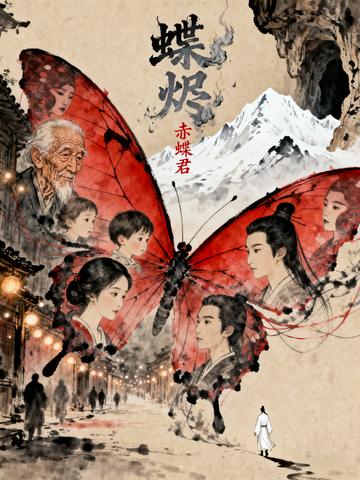


This novel is an Eastern fantasy work that has stood out to me recently. The most special thing about it is that the protagonist Jhin does not level up by killing monsters, but grows by "walking and carving". This young man who was born as "unlucky" spent twenty-eight years walking through the world and carving his joys and sorrows into the stone wall. By the time he returned, he had already lost his anger and became a practitioner with a deep pool in his heart. His power is not destruction, but "understanding" and "resonance." The core of the story is very deep: a closed tribe, adhering to a rigid "mandate of destiny" and repressive rules. Jhin's return is like a mirror, showing the cracks in the system and igniting the desire of the younger generation for "another possibility." The world view is solid, the writing is calm and beautiful, and the picture is very strong. If you are tired of fast-food-style novels and are looking for an immersive story with lasting appeal, this book is well worth reading. It talks about destiny, but it goes beyond resistance; it talks about strength, but it focuses on cultivating the mind. It can be called a clear stream of "still water runs deep" in Eastern fantasy.