Introduction to the novel
"A Happy Life" uses a two-line parallel narrative to dissect two seemingly different lives and explore the essence of "freedom".
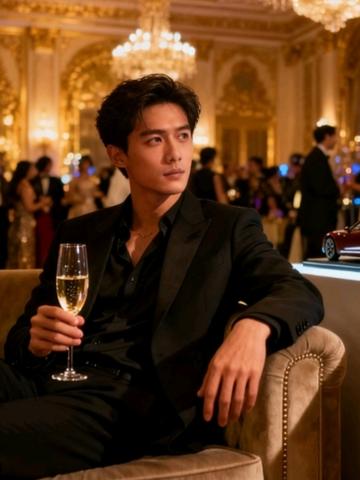
On one side is Wang Sicong's world: private jets shuttle around the world, luxury goods and hot searches are daily life. He uses capital to define success, but late one night he stares at the old loom left by his grandfather in a daze - those childhood afternoons that cannot be bought with money, squatting under the grape trellis and watching ants move, have become the most precious memories. When the investment failed and public opinion backfired, he was forced to stop his frantic running, and then he slowly understood that true freedom is never about owning everything, but about reconciling with oneself.
On the other side are the days of Chen Shouzhuo: the cornfields on the loess slopes, the creaking old locust trees at the entrance of the village, and the crooked words in the homework books of his grandchildren, constitute the entirety of his life. He has never seen the prosperity outside the mountains, but he is well versed in the principle of "spring sows and autumn harvests". In the plainness of "no pain, no gain", there is a calmness about gains and losses. When his children persuaded him to go to the city to enjoy the blessings, he smiled and shook his head: "Life is not about living in a high-rise, but about holding on to the roots and watching the shoots sprout upward."
The two trajectories continue to intersect in time: the old food stamps that Wang Sicong bought at the auction were exactly what Chen Shouzhuo bought with his sweat; the "Wang Sicong News" that Chen Shouzhuo's grandchildren saw on their mobile phones was just a casual post from him. In the end, they understood from their respective situations: the so-called "freedom" is never about the amount of wealth or status, but whether they can accept regrets, cherish the present, and live their lives the way they like in the rising and setting of the sun.