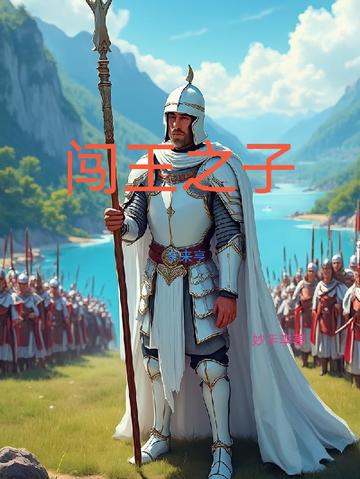
In the seventeenth year of Chongzhen, on a snowy night in Shanhaiguan, Li Zicheng was defeated and disappeared. The nine-year-old orphan Li Laiheng was wrapped up in Kuidong by his own soldier "Iron Kitty" Liu Zongmin. Ten years later, the boy grew up to be a sharp sword in the mountains: inheriting the Chuang Army's legacy of "equalizing land and eliminating taxes", he united thirteen families in East Kui, using the canyon as a chessboard and the heavy rain as a trumpet, relying on "Continuous Fire Guns" and "Mountain Flying Guns" to drag down the Eight Hundred and Eighty Banners for eight years. The governors of the Southern Ming Dynasty, He Tengjiao, Du Yinxi, Jianghu Tangmen, Western missionaries, Li Guo, the "one tiger" from his father's old department, and his nephew Li Dingguo were all among those he controlled. However, before the external troubles subsided, internal strife came first: the suspicion of Emperor Yongli, the original sin of regicide, the shadow of the red lady's death for the country, and the evil fate of the Jurchen spy leader Wu Yunzhu. In the end, the city of Wushan was broken. Li Laiheng lit the underground gunpowder magazine and died with the enemy. The thunder and fire shone on the Xiajiang River, leaving behind a sentence: "I am willing to accept the country, but not the country."
The works are completely fictional and have no insinuations; they promote the righteousness of the family and the country and criticize feudal autocracy; they are free of blood, vulgarity, extreme religion and ethnic discrimination. Four parts and sixteen volumes, intertwined portraits, cold weapons and early firearms collide, a tragic epic with a long lasting aftertaste.