Looking for a Martial Arts Novel That Can Surpass the Following One
I want to watch content similar to "Dragon to the Condor: A Hundred Years of Heroes". This book perfectly connects Jin Yong's martial arts world, but the main body is a new story and plot, classic traditional martial arts, no fantasy, no system, no time travel. Is it okay to call it Tomato Martial Arts Light?
3.3kViews98Books3moUpdated
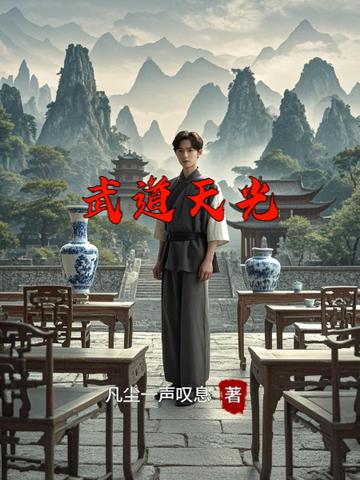
From "creating the Tao" to "practicing the Tao", we explore how when an idea that transcends the times truly takes root in the complex world, it will collide with power, desire, and worldliness, and ultimately truly change the world. The light of the heart is everlasting, and the road is never far away - Thoughts after reading "Martial Arts Tianguang" After closing the last page of "Martial Arts Sky Light", two words echoed in my heart for a long time - Heart Light. This is a novel about light. Starting from Kunlun, Mingxin went through the trials of the Holy Mountain, the construction of a school palace, disputes in rivers and lakes, and natural disasters to save the nation, and finally emerged on the Golden Summit of Emei, leaving behind the sentence "The light of the heart is immortal". Her light shone into Chen Mo's pen, into Zhang San's broom, into Liu Shouzheng's martial arts school, into Li Huailan's medical clinic, into the oasis in the Western Region, the snowfields in the Northern Xinjiang, and the miasmatic forest in the Nanling Mountains. Fifty years later, there will be martial arts schools in every state and county in the world. Children will build foundations at the age of five, and the light will shine all over the world. But this novel is never about one person's light. A Qi transformed the Tao to mend the sky and protected the martial arts with his life; Chen Mo lost all his martial arts, but found a new path by the Taihu Lake; Zhang San broke his leg and swept the ground in the academy for more than 20 years, sweeping away every inch of the road Mingxin walked. They are not people who stand on high places, they just live, do what they can, and help the people they can help. Because of this, they are closer to the original meaning of "Tao" than any hero. At the end of reading, the child who was sitting at the door of his house reading the "Three Characters of Martial Arts" raised his head and saw a light on the horizon, very bright and very steady. He didn't know what it was, but he thought it looked good. The light shone warmly on him. Isn't this exactly what "people who are on the road are not far away"? The Tao is not in the Sutra Pavilion, but in the fields, in medical clinics, in workshops, and in every ordinary day of ordinary people. The light of the heart never dies, not because a certain person will never die, but because countless people are willing to use their lives to light it up and pass it on. After reading this book, I have one sentence left in my heart: Be a person with light in your heart.
The novel goes from "creating the Taoism" to "practicing the Tao", exploring how when an idea that transcends the times is truly rooted in the complex human world, it will collide and integrate with power, desire, and secularity, and ultimately truly change the world. It's worth seeing.