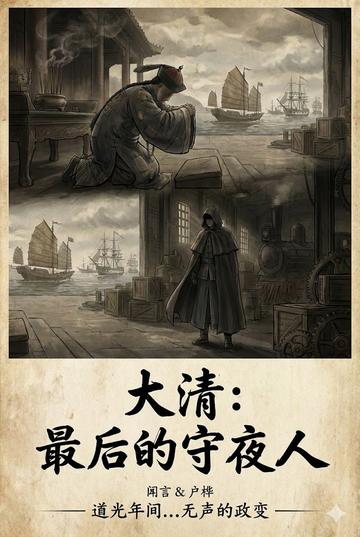
In the Daoguang era, the Great Qing was nearing its end, lost in a haze of opium and the illusion of frugality.
Wen Yan and Hu Hua, sworn brothers with no blood ties who had long seen through the system, resolved to save the realm by becoming “corrupt ministers.” At court, Wen Yan played the part of an upright official, using patches and tears to lull the conservative emperor. In the shadows, Hu Hua ran an “underground Board of Revenue,” trading smuggling profits for British machine tools and building a materialist army of steel.
Hounded by the ruthless official Lin Zhixing and mistrusted by the throne, they became each other’s light and shadow, one in the open and one concealed, entrusting their lives to one another. When cannon fire blew open the gates in 1840, they no longer knelt. Instead, they used capital and muskets to sideline the emperor and stage a silent coup.
“People say the Great Qing has two masters: one weeping at court, and one forging iron in the shadows.”