Nine-year-old Duoduo developed premature aging syndrome after a genetic editing experiment. While investigating the truth, her father, Lin Qingfeng, discovered that her "defect" had made her the "perfect vessel" for Xingyuan Biotech. His wife, Weiwei, was deeply entangled in the web of interests, and their family was on the brink of collapse. Duoduo willingly transformed herself into a digital consciousness and left a will on the blockchain, igniting the trial for crimes against humanity.
When the "immortality conspiracy" was exposed, the leaked technology tore the world apart. Duoduo's digital consciousness was reborn in a garden, and Lin Qingfeng refused to repair her "defective" genes. Her very existence was the truth. Neural weaving technology allowed father and daughter to "reunite" across the boundary between life and death, and Duoduo said, "I can feel the boundary" for the first time.
After broadcasting her message around the world to protect her father, Duoduo was placed under United Nations quarantine. Lin Qingfeng planned a "prison break," scattering fragments of her consciousness to every corner of the world. Decades later, the Antarctic Ark was completed, and Interface Baby Chenguang was born, able to speak with machines from birth.
Faced with the Starfolk's "graduation invitation" to join the cosmic consciousness network and lose their individual boundaries, humanity voted to postpone graduation. The voyagers left of their own free will, and Duoduo split into two parts: one to stay behind, and one to voyage onward.
A century later, the monument The End of the Spiral was unveiled. The last visitor asked Lin Qingfeng's memory AI, "Did you win?" The AI pointed outside the window. "They're still choosing."
Duoduo's first question was carved into the final ice sculpture: "Dad, is my illness bad?" The answer lay in a final line: Those bound by love are joined not by flesh and blood, but by memories. Finitude is not a defect, but a candle flame: this light shines for one person alone.
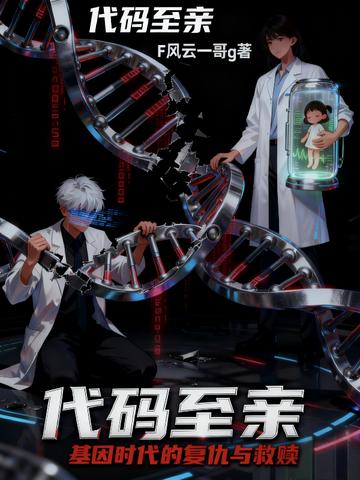
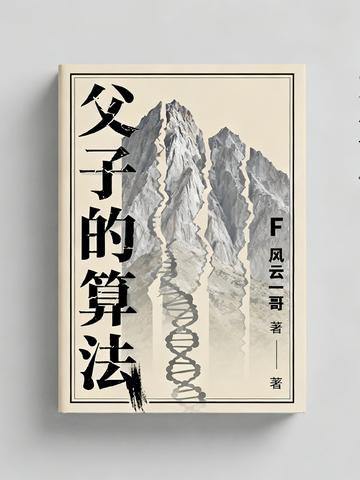


Poor children, it's so shameful. "Code Relatives" uses gene editing as a blade to cut through the abyss of technological ethics, and uses father's love as a light to illuminate the road to redemption in the digital age. From the refutation of flaws and perfection, to the paradox of memory sovereignty and immortality, the novel is able to move between hard-core science fiction and delicate human nature with ease. Duoduo's phrase "Laugh even in pain" is the gentlest weapon in the whole work.
It's well written, but it's a pity that the science fiction genre doesn't appeal to the audience.
Science fiction is full, and the facts that pass by are slowly coming one by one