Hidden in the gaps of history are the keys to subverting civilization.
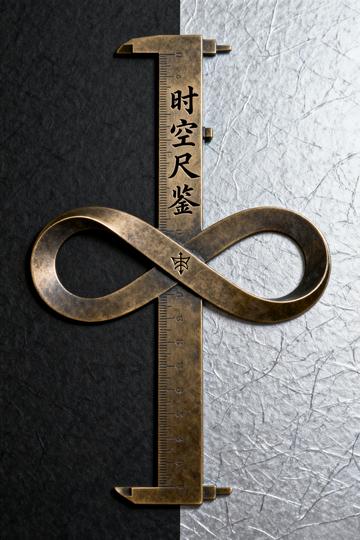
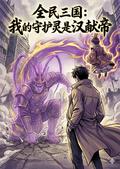
Qin Feng, a 28-year-old archaeologist, unearthed a bronze vernier caliper suspected to be from the Wang Mang period deep in the Qinling Mountains. The moment he touched the mysterious symbol on the body of the ruler, time and space were torn apart, throwing him into the turbulent new dynasty of AD 9.
Wang Mang, the "traveler emperor" wearing a dragon robe, is obsessed with creating an utopia through retro reforms; Zhuo Yunshang, a female official in the Tianjian, struggles between reason and faith; Zhang Zhan, the mysterious national master, guards the taboo boundaries of time and space; and the ancient organization "Gui and Rules" dormant in the dark is using blood and fire to eliminate all "anomalies"...
Qin Feng relied on archaeological insights and modern knowledge to circulate in the court under the name of "Tianji Pavilion Guest Minister". He promoted standardization to shake the iron curtain of interests and used economic law to fight against the chaotic currency system. However, when he tried to correct the direction of history, he found that he had already become part of the paradox - the future he brought may be an echo of history; the dynasty he wanted to save was accelerating its collapse because of him.
When the truth about the bronze ruler surfaced, when the prophecy of "Yinghuo Shou Xin" came true, when another time traveler drove the steel giant bird to tear the sky... Qin Feng realized: the stakes in this game are not only life and love, but also the ultimate answer to the survival of civilization.
[Highlights of the work]
Hard-core time travel: Anatomy of Wang Mang's new dynasty from an archaeological perspective, knowledge dimensionality reduction strikes intertwined with rigorous historical details
Machiavellian science fiction: Collision of ancient and modern thinking × Paradox of time and space × Secret war of mysterious organizations, creating a new paradigm of historical suspense
Philosophical inquiry: When a person holds the key to changing history, should he follow the trend or reverse destiny?
Reader comments
When Wang Mang's vernier caliper pierced the wall of historical dimensions
If you think that time-travel dramas are still following the routines of "Kowloon Seizes the Progeny" and "Brother Loves Me" - please accept this book "Time and Space Ruler: The Lost Traces of the New Dynasty", it may use a bronze caliper to knock your view of history to pieces.
When a "traveler" meets a "traveler": the worst peer involvement in history
The most wonderful setting of this book is that the protagonist Qin Feng is not the only time traveler. The Wang Mang he meets is the real senior. When the 21st century archaeologist fell into Chang'an in 9 AD and was about to use modern knowledge to flex his muscles, he found that the new emperor Wang Mang was smiling at him with a homemade vernier caliper: "Brother Qin, are you here too?"
At that moment, Qin Feng's expression probably resembled that of a wanderer who heard the local accent in a foreign country - if "local accent" refers to quantum physics and the theory of the primary stage of socialism.
The author used this wonderful counter-routine to complete the dimensionality reduction attack on the time-travel theme. Other time-travelers were still reciting Tang poetry and Song lyrics to shock the literati. Qin Feng was already facing a "socialist pioneer emperor" who nationalized land, banned the slave trade, and promoted a planned economy. What's even more absurd is that this senior's reforms are on the verge of collapse because they are too advanced, and what the protagonist has to do is to help him "take a smaller step" - this is probably the most frustrating golden finger in history.
History is a programmer, and we all live in bugs
The core philosophical proposition of this book is hidden in the shocking reversal in the fifth volume: the so-called "corrective force of history" is actually a "time and space order system" guarded by the national master. Those mysterious symbols are not witchcraft incantations, but maintenance codes from high-dimensional civilization.
When Qin Feng found out that every suggestion he made was accurately predicted, the feeling of horror was no less than finding out that he was living in the world of Truman. What's even more amazing is that Liu Xiu, the real executor of the system, was acting out the drama of "destined destination" while complaining in his heart: "This generation of time travelers is really difficult to lead. We need him to play his role, but we can't let him change the script."
This setting allows the entire book to jump out of the binary opposition of "changing history/following history" and enter into a more profound discussion: If history is a program destined to be written, what is the significance of individual struggles? Qin Feng's answer is: "Even if the trunk cannot be changed, the branches and leaves must grow better." - It can be called the "Sisyphus Declaration" of the world.

When Wang Mang's vernier caliper pierced the wall of historical dimensions If you think that time-travel dramas are still following the routines of "Kowloon Seizes the Progeny" and "Brother Loves Me" - please accept this book "Time and Space Ruler: The Lost Traces of the New Dynasty", it may use a bronze caliper to knock your view of history to pieces. When a "traveler" meets a "traveler": the worst peer involvement in history The most wonderful setting of this book is that the protagonist Qin Feng is not the only time traveler. The Wang Mang he meets is the real senior. When the 21st century archaeologist fell into Chang'an in 9 AD and was about to use modern knowledge to flex his muscles, he found that the new emperor Wang Mang was smiling at him with a homemade vernier caliper: "Brother Qin, are you here too?" At that moment, Qin Feng's expression probably resembled that of a wanderer who heard the local accent in a foreign country - if "local accent" refers to quantum physics and the theory of the primary stage of socialism. The author used this wonderful counter-routine to complete the dimensionality reduction attack on the time-travel theme. Other time-travelers were still reciting Tang poetry and Song lyrics to shock the literati. Qin Feng was already facing a "socialist pioneer emperor" who nationalized land, banned the slave trade, and promoted a planned economy. What's even more absurd is that this senior's reforms are on the verge of collapse because they are too advanced, and what the protagonist has to do is to help him "take a smaller step" - this is probably the most frustrating golden finger in history. History is a programmer, and we all live in bugs The core philosophical proposition of this book is hidden in the shocking reversal in the fifth volume: the so-called "corrective force of history" is actually a "time and space order system" guarded by the national master. Those mysterious symbols are not witchcraft incantations, but maintenance codes from high-dimensional civilization. When Qin Feng found out that every suggestion he made was accurately predicted, the feeling of horror was no less than finding out that he was living in the world of Truman. What's even more amazing is that Liu Xiu, the real executor of the system, was acting out the drama of "destined destination" while complaining in his heart: "This generation of time travelers is really difficult to lead. We need him to play his role, but we can't let him change the script." This setting allows the entire book to jump out of the binary opposition of "changing history/following history" and enter into a more profound discussion: If history is a program destined to be written, what is the significance of individual struggles? Qin Feng's answer is: "Even if the trunk cannot be changed, the branches and leaves must grow better." - It can be called the "Sisyphus Declaration" of the world.