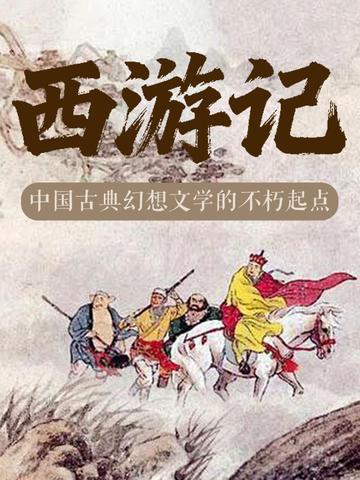
Before the term "fantasy literature" existed, "Journey to the West" had already provided a complete set of imaginative paradigms for later generations.
Fairies can cultivate their true bodies, mortals can embark on the path to immortality, mountains, rivers, and vegetation can all become spirits, and gods, Buddhas, monsters, and monsters all exist in the same book.
From the Huaguo Mountain to the Flame Mountain, from the Liusha River to the Daughter Country, space is constantly being opened up and boundaries are broken again and again.
Wu Cheng'en reconstructed the story based on previous stories and legends, and wrote the journey of seeking scriptures into a long journey full of transformations and trials: there are absurd and funny farces, and there are also satires that point directly to people's hearts.
Sun Wukong's seventy-two transformations and somersault clouds, Bajie's laziness and greed, Sha Monk's dullness, and Tang Monk who often hesitates but must move forward, together form a three-dimensional fantasy world.
Countless gods, monsters, immortals, and fantasy creations in later generations all more or less drew their themes and character templates from this work. Therefore, this work is regarded as the indelible "starting point" of Chinese classical fantasy literature.