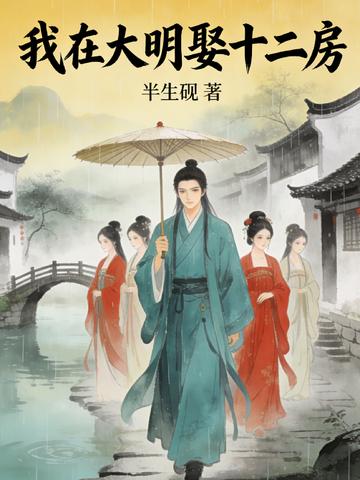
Zhang Xiaohua accidentally traveled to the Ming Dynasty and obtained Luban's medical book, but was cursed with "one missing".
It takes six pairs of extremely yin and extremely yang girls to resolve the problem.
He had an idea: "General Qi, can you help me recruit soldiers for the anti-Japanese war?"
While Qi Jiguang was dumbfounded, Zhang Xiaohua had already relied on modern knowledge to come up with ingenious strategies many times, and was promoted to the rank of Minister of War and Lord.
When the emperor granted the princess a marriage, he sealed the gold with a seal and disappeared in the misty Jiangnan with fourteen beauties...
Reader comments
Zhang Xiaohua's "slickness" and "cleverness" are not superficial cleverness, but the philosophy of survival and market wisdom that he has honed in a special environment as an educated youth who went to the countryside. This character setting makes him different from a stereotyped hero, and more like a real young man struggling to survive in the tide of the times. When he broke into the Ming Dynasty with this kind of modern bottom-level wisdom, his acting style and the rules of ancient society would inevitably collide with strong comedy sparks.
What's even more rare is that the author designed a clear growth arc for him. From the initial self-salvation of finding a wife to resolve the "missing one door" curse, to the later integration of Qi Jiguang's family and country justice in fighting the Japanese, the change in his motivations has sublimated the character structure. In the end, he gave up being a high-ranking official and chose to live in seclusion, completing the transformation from "self-interest" to "detachment", which made this character go beyond the position of a simple comedian and have profound connotations.




Zhang Xiaohua's "slickness" and "cleverness" are not superficial cleverness, but the philosophy of survival and market wisdom that he has honed in a special environment as an educated youth who went to the countryside. This character setting makes him different from a stereotyped hero, and more like a real young man struggling to survive in the tide of the times. When he broke into the Ming Dynasty with this kind of modern bottom-level wisdom, his acting style and the rules of ancient society would inevitably collide with strong comedy sparks. What's even more rare is that the author designed a clear growth arc for him. From the initial self-salvation of finding a wife to resolve the "missing one door" curse, to the later integration of Qi Jiguang's family and country justice in fighting the Japanese, the change in his motivations has sublimated the character structure. In the end, he gave up being a high-ranking official and chose to live in seclusion, completing the transformation from "self-interest" to "detachment", which made this character go beyond the position of a simple comedian and have profound connotations.