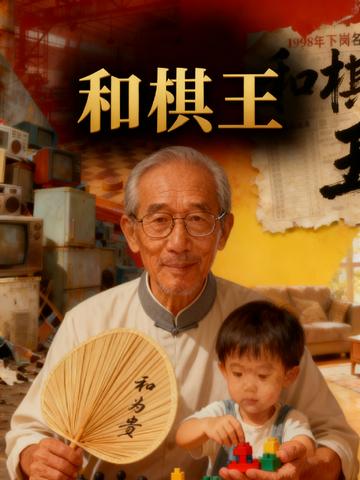
"The King of Chess" tells the story of the ordinary and tenacious life of Lao He, a chess master who lives in a scrapyard on the outskirts of the city. When he was young, he missed his dream of being a chess player due to a trick of fate. He was laid off, married, and impoverished, but he always adhered to the chess course of "win without fighting" on the cardboard chessboard. No matter he faced the challenge from the old street chess idiot or the temptation from the mysterious man on a rainy night, he always responded with a calm "draw" and was gradually respected as the "draw king".
The story uses chess as a link to connect the family relationship between him and his daughter, the mentorship across time and space with Teacher Zhou, and the warm mutual help among the neighbors in the old street. When his daughter became a talented person and his grandchildren became enlightened, when the abandoned chessboard became a symbol of cultural inheritance, Lao He spent his life interpreting the philosophy of "harmony": chess games can be harmonious, but life also needs tolerance and perseverance. In the end, his spirit lives on in the chess museum and his grandson's national championship trophy, proving that real victory lies in using flexibility to resolve sharp edges and writing legends with peace.