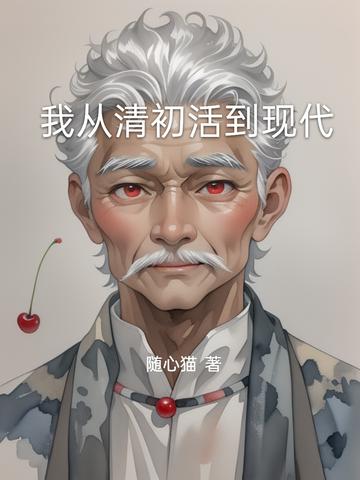
In the summer of 1645, the year of Yiyou, the Qing army went south.
The shaving order of "Keep your head but not your hair, keep your hair but not your head" is like a steel knife, cutting off the gentleness and romance of Jiangnan. Wu Mo, a scholar in the late Ming Dynasty, watched the clothes and hair accessories that had been passed down for thousands of years fall into the dust, and watched the loyal souls stain the earth with blood. In the extreme humiliation and despair, he swore to God: He was willing to pay any price, just to witness the end of this troubled world with his own eyes, and to record the most real scars and tenacity of Chinese civilization.
The sky responded to his vow, but also gave him the cruelest blessing - immortality.
From then on, he became a lonely recorder walking outside of time. From the "Three Massacres of Jiading" in the early Qing Dynasty to the "prosperity of Kangxi and Qianlong" under the surface; from the flames of the Opium War to the cry for the awakening of the Republic of China... He is not only a witness to the ups and downs of more than three hundred years, but also a "living history book" who uses his life, memory and even every artifact in his collection to engrave the truth.
He has witnessed the rupture and integration of civilizations, the rise and tragedy of heroes, and has struggled, confused, and interfered in the torrent of history, and has felt the utter loneliness of being an "immortal" again and again. He watched his beloved relatives and friends age and pass away generation after generation, with only his growing memory and the silent "history museum" made of physical objects to accompany him.
This is a personal lament for immortality, and it is also a vast witness to the history of modern China.
When the wheel of history finally moves towards modern times, when New China ushered in the dawn, the record written by Wu Mo with his life was finally unsealed! ! !