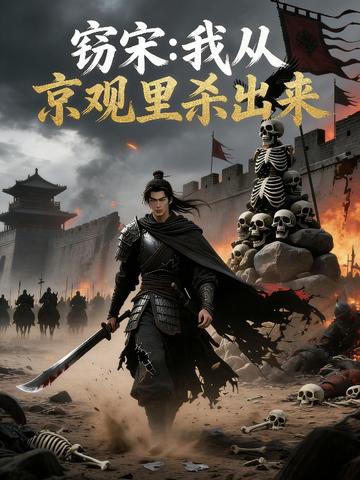
Others had a systematic and identity-based time travel, but his time travel was a hellish start - when he woke up, he was surrounded by corpses, and mountains of corpses were piled up in the distance. Two soldiers beside him were rummaging through the corpses: "The general wants to build a Jingguan with 3,000 heads, and we have to make up for one short one!" They turned over the pages, and suddenly stared at a "corpse" with familiar scratches - the head that made up the number was none other than Li Xiaoyao, who had just passed through the soul!
Reader comments
"Stealing the Song Dynasty: I Fight Out of the Beijing Palace" becomes more and more addictive the more I watch it! The opening scene of "Climbing out of the capital" directly fills the atmosphere. What follows is not only a thrilling game of fighting and killing, but also a very realistic depiction of a troubled time in which "the lights of the capital are bustling and the local people are in dire straits." Li Xiaoyao breaks the situation to seize evidence, saves people and protects files along the way. The villain burns warehouses, burns inns, snatches documents and silences his mouth. The sense of oppression is particularly strong. The rhythm is tight but not chaotic. What I like more is that the protagonist does not just shout slogans, but actually uses actions to illuminate dark alleys: saving people, checking accounts, and protecting people's hearts. The pattern becomes bigger and bigger. If you like Machiavellianism + Passion + Livelihood, feel free to rush!
"Stealing the Song Dynasty: I Fight Out of the Beijing Palace" becomes more and more addictive the more I watch it! The opening scene of "Climbing out of the capital" directly fills the atmosphere. What follows is not only a thrilling game of fighting and killing, but also a very realistic depiction of a troubled time in which "the lights of the capital are bustling and the local people are in dire straits." Li Xiaoyao breaks the situation to seize evidence, saves people and protects files along the way. The villain burns warehouses, burns inns, snatches documents and silences his mouth. The sense of oppression is particularly strong. The rhythm is tight but not chaotic. What I like more is that the protagonist does not just shout slogans, but actually uses actions to illuminate dark alleys: saving people, checking accounts, and protecting people's hearts. The pattern becomes bigger and bigger. If you like Machiavellianism + Passion + Livelihood, feel free to rush!