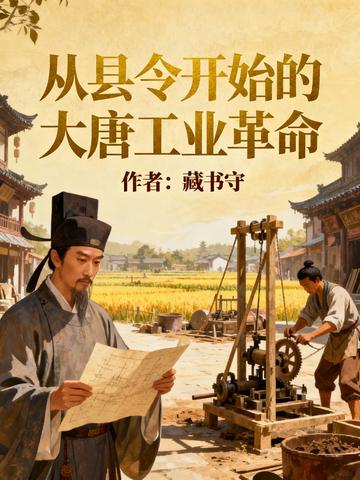
Lin Zhou, a doctoral graduate in engineering, unexpectedly transmigrates to the first year of the Zhenguan era, becoming the magistrate of a small county on the verge of being abolished.
Faced with corrupt clerks, empty coffers, and desperate poverty, he draws on a modern knowledge base and a photographic memory to begin a technological renaissance spanning a thousand years:
From improving the curved-share plow to inventing Yunyang frost sugar, from building waterworks to founding the Academy of Practical Studies, he brings modern engineering methods to the realities of the early Tang, taking root in the loess and letting technology flourish.
Yet reform is never a smooth road. Powerful local families lie in wait, political factions stir beneath the surface of the court, and conservative thinking follows close behind. As he struggles against vested interests and engages with the times, Lin Zhou must uphold the principles of innovation while learning to navigate the whirlpool of power.
Along the way, he meets Su Wanning, a female physician whose origins are shrouded in mystery. Her remarkable medical skills and enigmatic past will prove crucial to breaking through his predicament, while their shared trials quietly stir his heart.
This is an epic tale of a modern engineer striving in ancient times, a sweeping political drama where technological innovation meets officialdom, and a stirring song of ideals, steadfastness, and love in a flourishing age.
When rational thought collides with feudal bureaucracy, and the spark of science kindles the dawn of the Tang, can he make history without losing sight of who he is?
The plot is pretty good. The shortcoming is that the plot is relatively immature. There is also a bigger shortcoming, that is, someone was killed in the prison in the front, and the person named Zhao in the back was almost poisoned. It could be changed a little.
At first glance, AI is meaningless