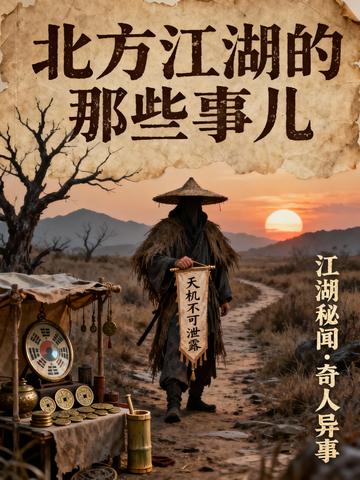
The classic work The Stories of the Northern Underworld vividly records the inner workings and diverse trades of the underworld in northern regions such as Beijing and Tianjin during the late Qing and early Republican eras. It describes in detail the four major branches known as "Wind, Horse, Goose, and Sparrow," as well as the eight minor branches known as "Gold, Skin, Color, Hanging, Flat, Group, Tuning, and Willow." They encompass hundreds of underworld trades, including selling combs, scissors and knives, scented powders, and medicinal plasters, as well as fortune-telling, face-reading, performing comic dialogue, and singing drum ballads. The book also takes an in-depth look at the "Swindlers' Branch" and the "Poverty-Stricken House Branch," revealing the inner workings of underworld scams and the lives of the poor. This work not only portrays the everyday diversity of the underworld, but also offers rich social and cultural value. It is a precious resource for understanding the old underworld, with great literary and historical significance.