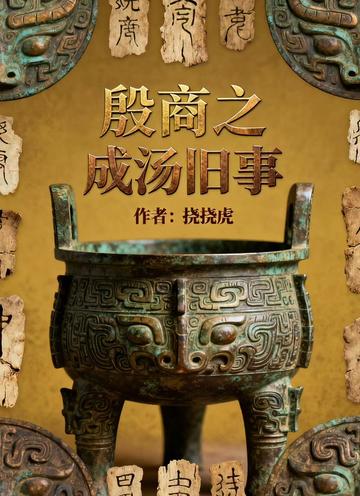
With a broad perspective and literary style, this book strives to reproduce the rise and fall of the Shang Dynasty over five hundred years. The whole book begins with the myth of "Xuanniao gave birth to merchants" and ends with the tragic song of "Self-immolation in Lutai". With forty exquisite chapters, it narrates the vicissitudes of the rise and fall of the Yin Shang Dynasty.
It not only focuses on the entrepreneurial epic of Cheng Tang who spread the world with his benevolence and virtue of "opening the net on three sides", and with the help of the wise Prime Minister Yi Yin, eradicated the tyranny of Xia Jie and laid the foundation for business; it also focuses on depicting the glory of Wu Ding's resurgence, the heroic conquests of women, and the splendid oracle bone civilization and bronze culture. However, destiny is impermanent, but virtue is the supplement. As the dynasty was in peace for a long time, the difficulties in the restructuring of Zujia, the disunity of the princes, and the undercurrent of public resentment finally pushed the illustrious Shangyi to the prophecy of "the legend of the nine-tailed fox, the decline of business fortunes". The last king, Zhou, although he showed great talent at first, finally fell into pride and suspicion. In the battle of Makino, his crown fell to the ground, and he composed a heroic and thought-provoking elegy.
It not only tells the history of the creation and destruction of princes, generals and ministers, but also tells the history of the evolution of early Chinese civilization systems. Beyond the simple narrative of good and evil, try to explore the dialectical relationship between "mandate of destiny" and "virtue and governance".