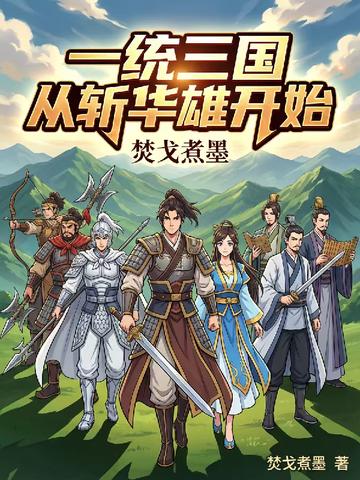
Unifying the Three Kingdoms, Starting by Beheading Hua Xiong
一统三国从斩华雄开始
- Status
- Ongoing
- Length
- 265k Words
- Genre
- Historical
- Subgenre
- Historical & Ancient
- Updated
- 3mo ago
- Source
- Fanqie
Synopsis
107Chapters
633Reads · all time
In booklists 1

Reader comments 6
Translated by Google Translate
1. Structural layout: The plot is well planned and the rhythm is like a symphony. 2. Character creation: The arc is clear and the group of characters has flesh and blood. 3. Writing techniques: cold and precise, excellent atmosphere creation 4. Thematic depth: not only revenge, but also a philosophy of survival in troubled times
This novel describes the troubled times of the late Han Dynasty as a hard-core battle of wits in which "the chess pieces are against the chess players": Yang Xuance started as an abandoned piece on the chessboard of the princes. He was ridiculed by Cao Cao for being "hypocritical" and Liu Bei thought he was "pedantic". He chose to kill Hua Xiong as the starting point and used his wits to break the game in the blood chess game. The writing style is cold and precise, and there is no empty golden finger. It only describes the step-by-step operation in the cracks of troubled times. It combines the cruelty of the power game and the restrained counterattack of the little people in a very personal way. The reading has both the weight of history and the thrill of a battle of wits.
This novel describes the troubled times of the late Han Dynasty and gives a hard-core feeling of "the chess piece turns into the chess player": Yang Xuance started as an abandoned piece in the chaotic world of bloody chess. He was scolded by Cao Cao for being "hypocritical" and Liu Bei thought he was "pedantic". He insisted on tearing apart the chess game of the princes and counterattacking step by step from the starting point of killing Hua Xiong. The writing style is capable and cold, and it combines the cruelty of troubled times and the protagonist's forbearing plot very tactfully - there is no floating golden finger, only the ruthlessness of sneaking into the cracks of the princes and breaking the chess game of life. Watching him grow from a manipulated chess piece to a chess player fighting for hegemony, the more you read, the more you can appreciate the tension of counterattack in troubled times.
When the war of the Three Kingdoms raged across the Central Plains, there was no shortage of involuntary chess pieces on the chessboard where princes competed. This book allows readers to see a little person's way of breaking the chess game in troubled times, using wisdom as an edge and character as the foundation. It does not fall into the cliché of historical time travel novels, but uses delicate strokes to outline the cruelty of the power game and the complexity of human nature, making "counterattack" no longer a matter of cheating out of thin air, but a step-by-step accumulation and decision-making. Yang Xuance in the book was just a chess piece at the mercy of others when he first entered the troubled times - maybe an abandoned piece in the disputes between princes, maybe a stepping stone in political schemes. Every step he took was on the edge of life and death. However, the author did not give him the golden finger to change his fate. Instead, he allowed him to rely on his insight into the historical context and his precise understanding of people's hearts to accumulate strength in the cracks. From deftly resolving the crisis of the Yingchuan Fire Attack to setting up a suspended animation to trap the Xiliang Army, every decision involves trade-offs and risks, and every advancement involves struggle and growth. This "non-suspended" growth trajectory makes the transformation "from chess piece to chess player" seem real and tangible, and allows readers to truly understand the difficulty of surviving in troubled times and the power of strategy when following the protagonist through the levels.
This novel describes the troubled times of the late Han Dynasty as a bloody chess game. Yang Xuance started out as an abandoned son who was scolded by Cao Cao for being "hypocritical" and Liu Bei disliked for being "pedantic", but he decided to use his resourcefulness as a counterattack to become a chess player. The plot is well planned, the rhythm is like a symphony, the characters have distinct arcs, and the cold writing accurately touches the refreshing feeling of troubled times, making people unable to stop following it.
The plot is cleverly designed, the content and story are rigorous, it is a good book and worth recommending