Zhu Yijun, a history graduate student, transmigrates into the body of three-year-old Zhu Yijun, a Ming dynasty prince and the future Wanli Emperor.
From the start, it's hell mode:
His grandfather, the Jiajing Emperor, is an obsessed cultivator and alchemy enthusiast who has people flogged at the slightest provocation.
His father, Prince Yu, is a veteran slacker and womanizer, and the inner court of his manor is a daily reenactment of The Ming Palace's Scheming Women.
The court is full of cunning old foxes, playing a Ming dynasty version of Game of Thrones.
Looking at this group of so-called divine teammates, Zhu Yijun tosses aside the rattle in his wet nurse's hand.
If I want the throne, I'll have to claim it myself!
He plans to lie low and build his strength, but the tide of history rolls on. The upright official Hai Rui is carrying his coffin toward the Forbidden City, ready to stage a Ming dynasty version of Final Destination!
A loyal minister is about to die in a pool of blood, and the empire's last vestige of integrity is about to be snuffed out.
Three-year-old Zhu Yijun can't sit by any longer.
He toddles forward and, to the astonishment of all the officials, grabs the hem of the future Imperial Tutor Zhang Juzheng. In the sweetest little voice, he says the harshest things:
"Master Zhang, save Hai Rui."
"Don't be like Shang Yang. That road leads only to death."
"If you want to be remembered, then be a Duke of Zhou, whose name will be honored for generations!"
At that moment, Zhang Juzheng looks at the adorable child before him and feels a chill run down his spine. How could this be a three-year-old? This is a monster who can see the future!
From then on, the Ming dynasty takes a dramatic turn.
Amid the smoke of Jiajing's alchemical pursuits and the songs and laughter of women in Prince Yu's inner court, a three-year-old begins his path of scheming, pretending to be weak while holding all the cards.
He quietly guides Zhang Juzheng and lays plans for the future;
He resolves one palace crisis after another without anyone noticing;
He will use his knowledge of several centuries of history,
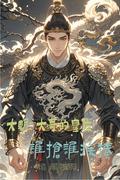
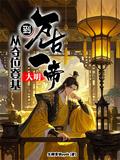
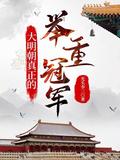
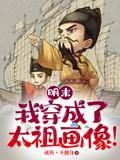
My first impression of this book is that the author may have pressed the history book and the Machiavellian article on the ground and rolled it into a ball, and then sprinkled it with some dry humor and cumin. The result is really delicious. Let's talk about Japan first: The Battle of Sekigahara was written like a live broadcast The Battle of Guanyuan in the book is not just as simple as "the Eastern Army won and the Western Army lost." The fog was as thick as a filter. The sound of gunshots, horses neighing, and shouts of death were mixed into a stew. You could also smell the smell of rain and blood. Ishida Mitsunari's sneer, Tokugawa Ieyasu's calculations, Kobayakawa Hideaki's "hesitant rebellion" - every detail makes people can't help but think: "Will this thing overturn in the next second?" The best thing is that the author did not write the characters as stereotyped "good guys" or "bad guys", but let them have their own agenda, just like fighting a super-sized Three Kingdoms, but everyone has different trump cards. Da Mingxian: It seems to be off track, but it is actually buried. I originally thought I would call it a day after the war in Japan, but I suddenly changed my mind and returned to the Wanli Dynasty of the Ming Dynasty. The noise in the courtroom was as noisy as a vegetable market - some people said that we need to disarm and save money, while others pounded the table and said that the border defense could not be withdrawn. Zhu Yijun looked calm on the surface, but he was probably thinking: "You are noisy, don't destroy my Liaodong." The scene when Zhao Chenglie from Liaodong led his brothers from the Zhonglie Health School to defeat the Tatars was like the scene of a "military teaching film". The tactics were explained clearly and the fight was exciting. It made me want to sign up for a "crash course in hygiene". Overall experience: hardcore and fun - Hard core: The historical materials are solid, and the formation, timeline, and character relationships of the Battle of Sekigahara can all stand up to scrutiny. - Interesting: The dialogues between the characters are interesting, such as Hiroyuki Yoshikawa's line "How can we fight if we don't have enough to eat?", Which made the tense atmosphere laugh out loud. - Pattern: From the Japanese Civil War to the Ming Dynasty's border defense, the field of vision extends to the entire East Asia, making people want to look at the map after reading. Summary The biggest charm of this book is that it is not only a feast for history fans, but also a happy home for Shuangwen readers. You can see machinations, betrayal, the end of a hero, and you can also see the brilliance of little people in the big era. Reading it is like watching a costume blockbuster without commercials, and the director also knows exactly what the audience wants to see. I bet you will be like me when you turn the first page: "Read one more chapter and then go to sleep... Hey, why is it dawn?"
The writing is so beautiful that it is the ceiling of history and intrigue. The plot struggle in the article is very exciting and high-energy throughout. The author's writing style is very good. Although it is a time-travel novel, he writes about many historical events. The content is engaging and highly recommended.