Love Like a Floating City is an urban romance novel that explores the emotional dilemmas of modern people. The story follows Shen Zhiyi, a relationship counselor who puts reason above all else. Her original theory of "rational love" has made her an emotional guide for city dwellers, yet in her own life she has built a high wall to shut out emotional turbulence. But when she tries to use her theory to intervene in her best friend's crumbling marriage, she unexpectedly meets Gu Yu, an easygoing, unconventional owner of a secondhand bookstore. Gu Yu trusts his instincts and values honesty, and his words strike straight to the heart, putting him at odds with Shen Zhiyi's ideas.
As their clashing beliefs meet the realities of one case after another, Shen Zhiyi's rational fortress begins to crumble. While helping others and confronting their own inner wounds, Shen Zhiyi and Gu Yu gradually go from irreconcilable debate partners to the only people who know how vulnerable the other can be.
Through believable, compelling episodes, the story offers a profound reflection on whether people in an increasingly rational modern society have given up their instinct to love out of fear of getting hurt. It not only portrays the moving journey of reason and emotion from conflict to harmony, but also explores the many forms love can take amid the bustle of everyday life. This is both a story of healing and growth and a vivid portrait of modern city dwellers searching for an emotional anchor.
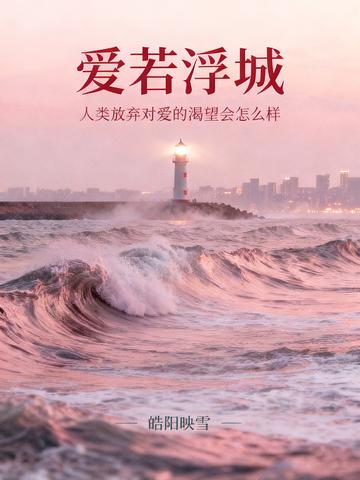
"Love is Like a Floating City" centers on the collision between psychological counselor Shen Zhiyi and bookstore owner Gu Yu, launching a profound discussion on the nature of emotion. Shen Zhiyi firmly believes in the "rational emotion theory" and tries to use data models to deconstruct love, while Gu Yu uses the fragrance of tea and intuition to attack her cold fortress of rationality. The two people went from rivals with different ideas to partners with soul resonance, interpreting the true meaning of growth of "rationality is the boat and emotion is the sail". The supporting cast of Jiang Kexin and Zhou Ming's "Straight Man Chasing His Wife in the Crematorium" uses comic contrast to deepen the theme and reveal that love cannot be quantified by algorithms. The work dissects all living beings in society through unit cases, and finally completes the dialectical unity of rationality and sensibility in the bookstore. A very good book, recommended to all book lovers.