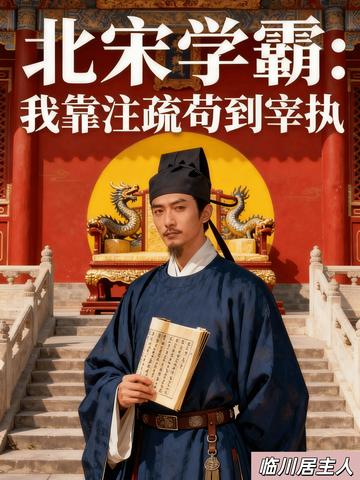
In the late spring of the second year of Qingli, Su Mingyuan, a doctor of ancient literature, traveled to Xuandemen in Bianjing. He had nothing to gain but a wealth of research on classics and historical textual research. When he shocked the booksellers of Xiangguo Temple with his "Zhu Mo correction method" for collating the fragments of "Hanshu", and used the "" character in "Shuowen Jiezi" to examine the "Long Zhun" variant of Gaozu and was appreciated by the Imperial College, a game of pure academic survival officially began.
In the whirlpool of the old and new party struggles in the mid-Northern Song Dynasty, Su Mingyuan used the "Shi Zhong theory" as a spear and version collation as a shield: he collated the archives of the Military Supervision in the third year of Zhidao, and uncovered the dispute over the interpretation of the word "" in Xining Baojia Law; analyzed The traces of changes in the "What is called Tao" in the Kaishu Shijing triggered a dispute between the Luo School and the New School; moreover, the interest rate of "The interest of national service" in "Zhou Li Quanfu" was used to examine the differences and find academic gaps in the debate between Wang Anshi and Sima Guang. From the principal of Chongwen Academy to the main campus of Sanguan Secret Pavilion, he not only had to deal with the temptations of the "momaniac" Wang Yan and other old officials in the officialdom, but also had to guard against the traps of the new party's ruthless officials such as Li Ding. He even used the knowledge of different texts of the "Book of Songs" to identify counterfeit coins and the knowledge of river surveying and mapping in "Shui Jing Zhu" to solve the Bianhe River dredging controversy.