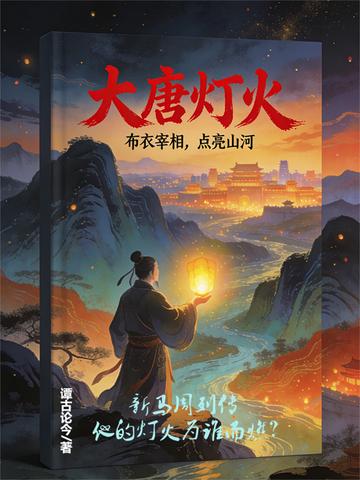
The prosperous age is about to begin, but the poor family is difficult to overcome.
Since ancient times, achievements have not been easy, and the road ahead has been long.
There is no prophet, no magical skills, and no domineering spirit. Everything starts from the mud!
The memory of the original owner: Broken! Identity: Poor family! Capital: Debt!
When true chastity is opened to you, how far can a modern soul go?
Guan Longxungui has many connections, and the Shandong noble family has a strict family structure. There is a turbulent undercurrent in the court, and there are powerful people in the countryside.
No matter if you have a ridge in your chest or a trap in your belly, you will inevitably hit a wall and escape being crushed.
However, a little light can break through a thousand years of darkness; a foot of water can make waves and moisten thousands of miles of fields.
Who would have thought that a single lamp could illuminate the mountains and rivers? Unexpectedly, a man clothed in commoner's clothing would find his way to heaven!
He once trudged on muddy roads and suffered the same hardships as slaves; he also once stood before the palace to give advice and discuss politics with the emperor. Improving waterwheels dares to touch the foundation of powerful people; building water conservancy projects can alleviate the hunger and cold of the common people. Now that the wind and rain are like darkness, and the wolves are in the way,
Then use your body as a candle to illuminate the mountains and rivers and warm your hometown!
"Lights of the Tang Dynasty": How a solitary lamp burned from the cold night of Majiaji to the court hall of Chang'an, and finally illuminated a prosperous age and hometown.
Reader comments
When the modern soul collides with the elegance of Zhenguan, "Lights of the Tang Dynasty" uses the double time-travel setting of Zhang Jianye and Ma Zhou to light up a passionate and tender counterattack in the prosperous Tang Dynasty! Unlike the solitary brave who traveled through time alone, the encounter between the two was like sparks igniting each other, causing amazing flowers to bloom in the dust of history.
One is transparent and courageous with a modern perspective, and the other carries the ideals and sharp thoughts of running the world and benefiting the people. They step on the drumbeat of Zhenguan, from the fireworks in the market to the turmoil in the court, use advanced cognition to dismantle the dilemma of the times, and use tacit cooperation to write the legend of counterattack. There is no brainless cheating with golden fingers, only the complementary wisdom and side-by-side trust of the two people. In the turbulent situation of the Tang Dynasty, they not only protect the morality in the heart, but also add the unique "stranger" color to the prosperous age.
The book has both the rich texture of historical details and the interesting interactions of double-crossed partners. Every plan and every game is enjoyable to watch. When Zhang Jianye's pragmatism collides with Ma Zhou's strategy, and when modern thinking blends with the style of the prosperous Tang Dynasty, this "light of the Tang Dynasty" that spans time and space not only illuminates the magnificence of history, but also warms the original intention of small people to support each other and pursue the light in troubled times. It's so exciting to read it!
Still reading, keep paying attention
The historical warmth illuminated by a solitary lamp is not only a time-travel novel, but also an affectionate inquiry into why Ma Zhou became Ma Zhou. With rare patience, the author allows a modern soul to huddle, tremble, and ignite in the cold night of the early Tang Dynasty. There is no golden finger eager to change the world, only the repeated tracing of water conservancy drawings under a solitary lamp. This awe of the historical process and empathy for individual struggles make the process of Zhang Jiye becoming Ma Zhou more shocking than any magnificent court drama. What it illuminates is the true body temperature of an idealist in the folds of history
The Other Side of the Tang Dynasty: How "Lamp" Polished a Forgotten Bronze Mirror in the Flood of Internet Articles
Among the vast library of Tomato literature, the title "Lights of the Tang Dynasty" is not surprising at first glance, and is even a bit unusual. It does not have the straightforward power of "god of war" or "supreme", nor does it have the temptation of "sweet pet" or "counterattack". It is like a glimmer of light that will easily be drowned in the bright fireworks of the torrent of data. However, when you follow this glimmer of light and step into it, you will find that what the author lit is not a reproduction of a magnificent era, but a warm and true light that can illuminate the folds of the prosperous age and the dark corners of human nature.
Of course, this work is not flawless. Some of the textual research may still have room for discussion, and the conclusion of some subplots is a little hasty. However, these minor flaws cannot conceal its unique luster as an excellent historical online text. It does not provide a "daydream" to escape reality, but invites us to have a deep "historical empathy"; it does not sell cheap historical vanity, but triggers our continuous thinking about the destiny of civilization, society and individuals.
All in all, "The Lights of the Tang Dynasty" is a breath of fresh air on the Tomato literature platform, and it is also a polished bronze mirror. The Tang Dynasty it reflects has lost the excessively magnificent oil paint applied by later generations, revealing its complex texture of intertwined warmth and coldness, coexistence of glory and suffering. For readers who are tired of reading "Invincible Starts" and "Sweet Pets with Sugar" and are eager to touch the true warmth and weight of history in words, this "Light of the Tang Dynasty" swaying in the torrent of data is worth your time to stop and watch, and let its light illuminate a neglected corner of your heart. It may not make your blood pump all the time, but the long aftertaste of warmth and desolation will definitely linger for a long time.
Today, with the explosion of historical online articles, "Lights of the Tang Dynasty" is like a strange color, blooming quietly on the Tomato Literature platform. Tan Gu Lun Jin's description of the prosperous Tang Dynasty did not choose the usual path of grand narrative, but took a different path. The most touching thing about this work is precisely that it elevates the image of "lights" from the background to the foreground, allowing history to move from the heights of temples to the depths of the marketplace.
Seeing the prosperous times through glimmers of light: the civilian turn in writing history
The title of "Lights of the Tang Dynasty" is a declaration. Different from the imperial perspective of "The Long Song of Zhenguan" or the rivers and lakes legend of "The Legend of Two Dragons of the Tang Dynasty", Tan Angu Lun Jin chose a more plain entry point: lights.
"The Lights of the Tang Dynasty" is an anti-routine historical life novel. It does not rely on the time-travel setting to bring information disparity and excitement, but relies on its profound historical foundation, delicate literary touches and unique civilian perspective to light up a warm and real lamp for readers that can shine into the texture of daily life in the Tang Dynasty. If you are tired of the same cookie-cutter time-travel narratives and long to see a world of the Tang Dynasty that is simpler, more lively and needs to be savored slowly, then this work will be a very rare and surprising choice.
It takes root in historical facts and blooms in fiction. The author's research on martial ethics and the political situation during the Zhenguan period is commendable. What is commendable is that the research is not to show off skills, but to fully serve the character creation. The historical label of Ma Zhou's aloofness in his youth is reasonably interpreted as a modern soul, a projection of depression under a rigid system, and his legendary history of prosperity is also endowed with local sentiments. This novel with a warm core completes the most reasonable ideal and enrichment of the spiritual world of a famous prime minister in the Tang Dynasty within a rigorous historical framework.
I am following this novel. The author is eloquent and has profound artistic skills. It is not an ordinary Internet novel, but it allows me to see history, understand people's hearts, and enrich my knowledge.
What I most recognize is the logic of this book, which is especially suitable for quiet reading.
When the power company swept away the poor households in the Tang Dynasty, what was it like to experience late-stage occupational diseases? ——When I saw an old water tanker, I wanted to write a "Notice on Rectification of Potential Safety Hazards." When facing the dirt road, I started to brainstorm the "Implementation Plan for Hardened Roads in Every Village." I even had to study the "Compendium of Materia Medica" QC quality team to eat wild vegetables. Others relied on poems to cheat during time travel, but this old man just turned Zhenguan Village into the "Datang Infrastructure Headquarters" and used KPI thinking to defeat the ancient subordinate officials. Suggested book titles with subtitles: "About my years as chief engineer in the Tang Dynasty", "Leader, this project really lacks an excavator"
👍 Warm reminder: After reading this, you will be in awe when you look at the distribution box in your own community.
The author not only restores the customs and humanities of the Tang Dynasty, but also does not have the sense of suspension caused by the "golden finger" of the time traveler. From improving people's livelihood to offering advice to the court, the two used modern thinking to collide with the order of the feudal dynasty, and every confrontation was full of tension. The book contains both the surging feelings of family and country, as well as the warmth of urban life, making the thousand-year-old Tang Dynasty vivid and tangible under the light of lights. You can't stop reading it!
When the modern soul knocks on the door of the prosperous Tang Dynasty
"This is not a time travel, but a pilgrimage to return to your hometown."
"The Lights of the Tang Dynasty" tells the story of Zhang Jiye, the leader of the power grid, who accidentally traveled through time and became Ma Zhou, a famous official in Zhenguan, but started from the humblest place and finally changed the times by blending modern wisdom with ancient wisdom. The most touching thing about it is not the refreshing feeling of "dimensionality reduction attack", but the profound narrative of how a modern man finds his place in the grand history.
The highlight of this story is that "local sentiment" illuminates the cold power of politics: among many historical articles focusing on the power of temples, the core of this book is extremely warm. The protagonist's nostalgia for "Chiping" that transcends time and space is the starting point and destination of all his struggles. Building water conservancy and developing education, these seemingly ordinary measures have become as important as the deep feeling of "this place where I feel at ease is my hometown". This made his "contribution" out of the utilitarian level and sublimated it into a concrete love for a land and its people.
The overall feeling is that this is more than just a historical time travel novel. It is a profound discussion about "hometown" and "destination", and a wonderful demonstration of the dialectical integration of modern technology and ancient wisdom. The author uses calm and delicate writing to make us believe that it is really possible for a modern soul to go through the Zhenguan years in this way, and leave his own warm breath in the words of history books.
If you are tired of the exaggerated time-travel farce and long to see how a soul with weight, warmth, and wisdom can down-to-earth create a legend in the glorious Tang Dynasty, then this book will be your best choice. It is dedicated to all readers who believe that wisdom and affection are enough to travel through time and space.
A lamp illuminates the prosperous Tang Dynasty, and half of the book travels back and forth to write about the human world - Thoughts after reading "Lights of the Tang Dynasty"
When the wave of time travel sweeps across the field of historical literature, "Lights of the Tang Dynasty" breaks out of the cliché of "gold fingers clear the way and cheats all the way", and uses a warm and tough light to illuminate the fireworks world and the stormy world of the prosperous Tang Dynasty. The protagonist falls into the Zhenguan era with a modern soul. He does not have the super power to control the wind and rain, but only has a delicate and down-to-earth sobriety that can see people's hearts. From making a living in the market to playing games in the court, every step is solid and hot.
The most moving thing about the novel is the balanced description of the character of the prosperous Tang Dynasty and the fireworks of the world. The protagonist's calculations when struggling to make a living, the warmth of getting along with neighbors, and the struggle when facing difficulties make the time traveler no longer a suspended "spectator", but a "participant" truly rooted in the times. This exquisite study of historical details and depiction of the quality of life make the Tang Dynasty no longer a cold background, but a living world with warmth and breathing.
What's even more rare is the protagonist's growth line and the transmission of values. He did not rush to subvert the times, but used modern thinking as his edge, and on the premise of respecting historical logic, promoted changes in subtle ways: improving agricultural tools to benefit his neighbors, optimizing skills to improve people's livelihood, and using reason and empathy to resolve conflicts. This kind of change of "no slowness, no slowness, no noise" is far more convincing than "one-time change", and it also makes "feelings for family and country" no longer an empty slogan, but is implemented in every little thing that "makes people live a better life". The supporting characters in the book also have their own brilliance. They all break away from the flat tool-person setting and have their own persistence and choices, which makes the group portraits of the story particularly exciting.
The rhythm of the plot is relaxed and moderate. It contains the fun of life in the market, the shocking plot of the court, and the passion for the righteousness of the family and the country. The author's writing is simple and powerful. He does not deliberately pile up rhetoric, but he can see the truth in the plain and hide the deep meaning in the details. Reading "Lights of the Tang Dynasty", it feels like you have really followed the protagonist into the inclusive and colorful Tang Dynasty, watching the lights rising in the alleys and eventually becoming a prairie fire, illuminating the hope and warmth of an era.
For readers who like historical time travel stories, this is not only a masterpiece that brings joy and tears at the same time, but also an immersive journey into the prosperous Tang Dynasty - it allows us to see that the most moving time travel is never about changing history, but about living your own wonderful life in a strange era with modern goodwill and wisdom, and also warming others.
The pen is the light, the ink is the galaxy: On the alchemy of writing in "The Lights of the Tang Dynasty"
At a time when online writing pursues "fast pace" and literature pursues "deep thought", reading a work like this is a long-lost luxury. It makes people believe that in the realm of historical novels, true "good writing" is far from a pile of words, but an alchemy that melts thoughts, emotions and historical dust into sensible light and shadow. With his exquisite writing power, the author illuminates for us a picture scroll of the Tang Dynasty that is not static, but allows readers to step into it, feel the wind, touch the frost, and witness how a lamp burns into a galaxy.
The writing style of this work is a comprehensive and highly conscious literary one. It has the skeleton of history, the flesh and blood of poetics, the nerves of philosophy and the context of engineering. It is not satisfied with telling a story of "success in ancient times", but insists on asking: how a modern, lonely individual with technical rationality and humanistic care can find meaning, place himself in a strange and grand era, and leave an eternal light.
The author uses his pen as a lamp, which not only illuminates the world of the Tang Dynasty that he constructed, but also illuminates a possible path for the creation of historical novels with a calm and confident light - where literary, intellectual and storytelling can achieve such an elegant and powerful balance. This is not only good writing style, but also a manifestation of the realm of writing.
A project delivery that spans thousands of years. This novel can be called a costume version of The Craftsman of a Great Country. The protagonist seamlessly transfers the system thinking, risk assessment and project management experience of power grid management to the water conservancy and water transportation projects of the Tang Dynasty. It reads with both familiar professional intimacy and flashes of wisdom that transcend time and space. It vividly explains that the real core technology is the thinking mode of solving problems. Watching infrastructure projects being pushed forward with difficulty amidst debates over resource constraints in court is like witnessing a rigorous millennium delivery, which gives me a full sense of accomplishment.
In terms of narrative structure, "Lights of the Tang Dynasty" shows exquisite ingenuity. The novel does not adopt the grand epic mode of linear advancement, but uses scattered perspective to weave a dense network of human relationships through a series of seemingly independent but interrelated stories. Each chapter is like an independent lantern, illuminating a forgotten corner; and when these lights converge, they outline the spiritual topography of the entire era. In particular, the image of "light" throughout the book is not only a concrete lighting tool, but also a metaphor for the transmission of knowledge, the retention of memory, and the immortality of hope.
It is true that "Lights of the Tang Dynasty" is not a flawless white jade. The conclusion of some branch plots is a little hasty, and the balance between academic details and story rhythm of some historical scenes can be further polished. But the flaws do not hide the flaws. These minor shortcomings are insignificant in the face of the literary ambition and humanistic care displayed in the work as a whole.
"Lights of the Tang Dynasty" provides readers with much more than just a recreational time. It is like a warm candle that has traveled through thousands of years. It not only illuminates the dusty faces in the historical corridor, but also reflects the confusion and longing of our own era. In this era of pursuit of speed and representation, it reminds us to slow down, listen to the whispers drowned by the noise, and cherish the light of individual life that still shines stubbornly outside the grand narrative.
This work is not only a love letter to the Tang Dynasty, but also an invitation to all hearts looking for meaning and connection in the long river of time. The lights are on, waiting for you all.
The writing is very good, the protagonist's character is vividly portrayed, and the story is also wonderfully depicted.
The author vividly depicts the spectacular Zhenguan years, and the writing is very good.
A particularly well-written time travel novel. The protagonist personally compiled his own lanterns of the Tang Dynasty.
The ultimate counterattack of a poor family in technology is a thrill in my bones. I am tired of seeing the system every second. This power grid squad leader gave a model of hard-core time travel, from using engineering thinking to draw water conservancy diagrams to using water transportation as a circuit transformation to optimize the protagonist. Every step of rise is based on solid technical strength. This kind of sadness of relying on professional knowledge and breaking through the layers is solid and advanced. This is not cheating, this is a real dimensionality reduction attack. I look forward to seeing more exciting stories.
The long march of the soul from the other to the self
This book deeply depicts how a dual stranger (traveler + humble scholar) completes his identity? At first, the protagonist looks on with Zhang Jiye's thinking, but later empathizes with Ma Zhou's fate in the setbacks. Finally, in the action of benefiting Xiangzi, the two identities reach reconciliation and unity, and this journey becomes Ma Zhou's spiritual long march. More profound than any official promotion. He discusses an eternal proposition: how do we find our place in a strange world and leave an indelible mark?
The Electrician Comes to the Lights of the Tang Dynasty, a double entendre, is so well written that it not only describes the identity of the electrician, but also writes about the world that the protagonist has worked hard for after traveling through time.
The detailed descriptions are vivid and vivid, which enhances the realism of the story.
The whole novel is passionate and tender. It is beautifully written and the characters are very distinct.
The most moving light of "Lights of the Tang Dynasty" does not come from wild imagination, but from precise research and profound thinking rooted in solid historical soil. Using the example of Zhang Jiye, a power grid worker who traveled through time and became Ma Zhou, a famous minister of the Tang Dynasty, the author weaves a long ecological scroll of Shandong's rural areas in the early years of Zhenguan. Especially in the two dimensions of taxation system and water conservancy technology, it shows historical knowledge and humanistic care that go beyond ordinary online literature.
For example, the novel's description of the tax system of the Tang Dynasty is by no means a general discussion in the background, but as a core element that drives the fate of the characters and creates dramatic tension. The author accurately grasps the complex texture of the "rent-yongtiao" system in the early Tang Dynasty and its alienation in local implementation: Under the surface fairness of the Ma Zhou family's "five-five rent", there is hidden the ambiguity of land classification-the rent of dry land is charged as farmland, and the natural risks are completely transferred to the tenants. This is not a fabrication by the author, but a common method used by landlords to avoid risks and maximize profits during the disintegration of the land equalization system in the Tang Dynasty.
"The Lights of the Tang Dynasty" builds a solid and heavy historical stage with its solid research on the tax system, water conservancy, and agricultural technology of the Tang Dynasty. On this stage, the time traveler does not have magical powers, and his modern knowledge must repeatedly blend, compromise, and innovate with the materials, tools, social rules, and human nature of the Tang Dynasty. It is this kind of "limited travel" and "rooted innovation" that makes every step of Ma Zhou (Zhang Jiye) step on the real historical soil, and every small success is hard-won and touching.
It is not only a story about personal struggle, but also a microscopic picture of the social and economic ecology of rural Shandong in the early Tang Dynasty, and a profound ode to the wisdom, perseverance and suffering of ancient farming civilization. The author uses the light of knowledge to illuminate the neglected corners of history, and also makes readers believe that even under the most solid frozen soil, the fire of hope for pursuing a better life and improving living conditions has never been extinguished. This may be the most precious value of historical novels.
The author's logical thinking is clear and his writing is fluent. It's worth reading.
The author's writing skills are very profound. He also wrote about the prosperous age of the Tang Dynasty and described the characters' psychology very well.
The writing is very wonderful, and many scenes are vividly described. It is a good book worth following.
It's suitable for listening to in bed at night. It's very relaxing and comfortable. I hope the author will work hard.
The author has a profound writing skills and writes about the culture of the Tang Dynasty very well, making you feel like you are on the scene.
The plot is compact and interlocking. What attracts me is that it is easy to read. I give the author a thumbs up.
The author has a deep understanding of the history and culture of the Tang Dynasty, and many of the contents are very close to history. It must be five stars.
Listen to Jing Lei's advanced wisdom in silence. The tactics here are not clever calculations, but the top wisdom of survival and development. The protagonist always transforms modern knowledge into language that fits the context of the times and creates rules within the rules. I believe that the protagonist will be able to accurately break the situation at every step, from the lonely lantern to the lights of thousands of families, and show it in the torrent of history. I believe that the protagonist's true power comes from his ability to solve real problems
The author's storyline is very good, the story is full, and it is not procrastinating or cliché at all.
A very exciting time travel story, especially the time travel to the Tang Dynasty. The writing in this era is so wonderful and the content is so full.
Traveling back to the Tang Dynasty, it re-describes that period of glory. It's so well written.




When the modern soul collides with the elegance of Zhenguan, "Lights of the Tang Dynasty" uses the double time-travel setting of Zhang Jianye and Ma Zhou to light up a passionate and tender counterattack in the prosperous Tang Dynasty! Unlike the solitary brave who traveled through time alone, the encounter between the two was like sparks igniting each other, causing amazing flowers to bloom in the dust of history. One is transparent and courageous with a modern perspective, and the other carries the ideals and sharp thoughts of running the world and benefiting the people. They step on the drumbeat of Zhenguan, from the fireworks in the market to the turmoil in the court, use advanced cognition to dismantle the dilemma of the times, and use tacit cooperation to write the legend of counterattack. There is no brainless cheating with golden fingers, only the complementary wisdom and side-by-side trust of the two people. In the turbulent situation of the Tang Dynasty, they not only protect the morality in the heart, but also add the unique "stranger" color to the prosperous age. The book has both the rich texture of historical details and the interesting interactions of double-crossed partners. Every plan and every game is enjoyable to watch. When Zhang Jianye's pragmatism collides with Ma Zhou's strategy, and when modern thinking blends with the style of the prosperous Tang Dynasty, this "light of the Tang Dynasty" that spans time and space not only illuminates the magnificence of history, but also warms the original intention of small people to support each other and pursue the light in troubled times. It's so exciting to read it! Still reading, keep paying attention
The historical warmth illuminated by a solitary lamp is not only a time-travel novel, but also an affectionate inquiry into why Ma Zhou became Ma Zhou. With rare patience, the author allows a modern soul to huddle, tremble, and ignite in the cold night of the early Tang Dynasty. There is no golden finger eager to change the world, only the repeated tracing of water conservancy drawings under a solitary lamp. This awe of the historical process and empathy for individual struggles make the process of Zhang Jiye becoming Ma Zhou more shocking than any magnificent court drama. What it illuminates is the true body temperature of an idealist in the folds of history
The Other Side of the Tang Dynasty: How "Lamp" Polished a Forgotten Bronze Mirror in the Flood of Internet Articles Among the vast library of Tomato literature, the title "Lights of the Tang Dynasty" is not surprising at first glance, and is even a bit unusual. It does not have the straightforward power of "god of war" or "supreme", nor does it have the temptation of "sweet pet" or "counterattack". It is like a glimmer of light that will easily be drowned in the bright fireworks of the torrent of data. However, when you follow this glimmer of light and step into it, you will find that what the author lit is not a reproduction of a magnificent era, but a warm and true light that can illuminate the folds of the prosperous age and the dark corners of human nature. Of course, this work is not flawless. Some of the textual research may still have room for discussion, and the conclusion of some subplots is a little hasty. However, these minor flaws cannot conceal its unique luster as an excellent historical online text. It does not provide a "daydream" to escape reality, but invites us to have a deep "historical empathy"; it does not sell cheap historical vanity, but triggers our continuous thinking about the destiny of civilization, society and individuals. All in all, "The Lights of the Tang Dynasty" is a breath of fresh air on the Tomato literature platform, and it is also a polished bronze mirror. The Tang Dynasty it reflects has lost the excessively magnificent oil paint applied by later generations, revealing its complex texture of intertwined warmth and coldness, coexistence of glory and suffering. For readers who are tired of reading "Invincible Starts" and "Sweet Pets with Sugar" and are eager to touch the true warmth and weight of history in words, this "Light of the Tang Dynasty" swaying in the torrent of data is worth your time to stop and watch, and let its light illuminate a neglected corner of your heart. It may not make your blood pump all the time, but the long aftertaste of warmth and desolation will definitely linger for a long time. Today, with the explosion of historical online articles, "Lights of the Tang Dynasty" is like a strange color, blooming quietly on the Tomato Literature platform. Tan Gu Lun Jin's description of the prosperous Tang Dynasty did not choose the usual path of grand narrative, but took a different path. The most touching thing about this work is precisely that it elevates the image of "lights" from the background to the foreground, allowing history to move from the heights of temples to the depths of the marketplace. Seeing the prosperous times through glimmers of light: the civilian turn in writing history The title of "Lights of the Tang Dynasty" is a declaration. Different from the imperial perspective of "The Long Song of Zhenguan" or the rivers and lakes legend of "The Legend of Two Dragons of the Tang Dynasty", Tan Angu Lun Jin chose a more plain entry point: lights. "The Lights of the Tang Dynasty" is an anti-routine historical life novel. It does not rely on the time-travel setting to bring information disparity and excitement, but relies on its profound historical foundation, delicate literary touches and unique civilian perspective to light up a warm and real lamp for readers that can shine into the texture of daily life in the Tang Dynasty. If you are tired of the same cookie-cutter time-travel narratives and long to see a world of the Tang Dynasty that is simpler, more lively and needs to be savored slowly, then this work will be a very rare and surprising choice.
It takes root in historical facts and blooms in fiction. The author's research on martial ethics and the political situation during the Zhenguan period is commendable. What is commendable is that the research is not to show off skills, but to fully serve the character creation. The historical label of Ma Zhou's aloofness in his youth is reasonably interpreted as a modern soul, a projection of depression under a rigid system, and his legendary history of prosperity is also endowed with local sentiments. This novel with a warm core completes the most reasonable ideal and enrichment of the spiritual world of a famous prime minister in the Tang Dynasty within a rigorous historical framework.
I am following this novel. The author is eloquent and has profound artistic skills. It is not an ordinary Internet novel, but it allows me to see history, understand people's hearts, and enrich my knowledge. What I most recognize is the logic of this book, which is especially suitable for quiet reading. When the power company swept away the poor households in the Tang Dynasty, what was it like to experience late-stage occupational diseases? ——When I saw an old water tanker, I wanted to write a "Notice on Rectification of Potential Safety Hazards." When facing the dirt road, I started to brainstorm the "Implementation Plan for Hardened Roads in Every Village." I even had to study the "Compendium of Materia Medica" QC quality team to eat wild vegetables. Others relied on poems to cheat during time travel, but this old man just turned Zhenguan Village into the "Datang Infrastructure Headquarters" and used KPI thinking to defeat the ancient subordinate officials. Suggested book titles with subtitles: "About my years as chief engineer in the Tang Dynasty", "Leader, this project really lacks an excavator" 👍 Warm reminder: After reading this, you will be in awe when you look at the distribution box in your own community.
The author not only restores the customs and humanities of the Tang Dynasty, but also does not have the sense of suspension caused by the "golden finger" of the time traveler. From improving people's livelihood to offering advice to the court, the two used modern thinking to collide with the order of the feudal dynasty, and every confrontation was full of tension. The book contains both the surging feelings of family and country, as well as the warmth of urban life, making the thousand-year-old Tang Dynasty vivid and tangible under the light of lights. You can't stop reading it!
When the modern soul knocks on the door of the prosperous Tang Dynasty "This is not a time travel, but a pilgrimage to return to your hometown." "The Lights of the Tang Dynasty" tells the story of Zhang Jiye, the leader of the power grid, who accidentally traveled through time and became Ma Zhou, a famous official in Zhenguan, but started from the humblest place and finally changed the times by blending modern wisdom with ancient wisdom. The most touching thing about it is not the refreshing feeling of "dimensionality reduction attack", but the profound narrative of how a modern man finds his place in the grand history. The highlight of this story is that "local sentiment" illuminates the cold power of politics: among many historical articles focusing on the power of temples, the core of this book is extremely warm. The protagonist's nostalgia for "Chiping" that transcends time and space is the starting point and destination of all his struggles. Building water conservancy and developing education, these seemingly ordinary measures have become as important as the deep feeling of "this place where I feel at ease is my hometown". This made his "contribution" out of the utilitarian level and sublimated it into a concrete love for a land and its people. The overall feeling is that this is more than just a historical time travel novel. It is a profound discussion about "hometown" and "destination", and a wonderful demonstration of the dialectical integration of modern technology and ancient wisdom. The author uses calm and delicate writing to make us believe that it is really possible for a modern soul to go through the Zhenguan years in this way, and leave his own warm breath in the words of history books. If you are tired of the exaggerated time-travel farce and long to see how a soul with weight, warmth, and wisdom can down-to-earth create a legend in the glorious Tang Dynasty, then this book will be your best choice. It is dedicated to all readers who believe that wisdom and affection are enough to travel through time and space. A lamp illuminates the prosperous Tang Dynasty, and half of the book travels back and forth to write about the human world - Thoughts after reading "Lights of the Tang Dynasty" When the wave of time travel sweeps across the field of historical literature, "Lights of the Tang Dynasty" breaks out of the cliché of "gold fingers clear the way and cheats all the way", and uses a warm and tough light to illuminate the fireworks world and the stormy world of the prosperous Tang Dynasty. The protagonist falls into the Zhenguan era with a modern soul. He does not have the super power to control the wind and rain, but only has a delicate and down-to-earth sobriety that can see people's hearts. From making a living in the market to playing games in the court, every step is solid and hot. The most moving thing about the novel is the balanced description of the character of the prosperous Tang Dynasty and the fireworks of the world. The protagonist's calculations when struggling to make a living, the warmth of getting along with neighbors, and the struggle when facing difficulties make the time traveler no longer a suspended "spectator", but a "participant" truly rooted in the times. This exquisite study of historical details and depiction of the quality of life make the Tang Dynasty no longer a cold background, but a living world with warmth and breathing. What's even more rare is the protagonist's growth line and the transmission of values. He did not rush to subvert the times, but used modern thinking as his edge, and on the premise of respecting historical logic, promoted changes in subtle ways: improving agricultural tools to benefit his neighbors, optimizing skills to improve people's livelihood, and using reason and empathy to resolve conflicts. This kind of change of "no slowness, no slowness, no noise" is far more convincing than "one-time change", and it also makes "feelings for family and country" no longer an empty slogan, but is implemented in every little thing that "makes people live a better life". The supporting characters in the book also have their own brilliance. They all break away from the flat tool-person setting and have their own persistence and choices, which makes the group portraits of the story particularly exciting. The rhythm of the plot is relaxed and moderate. It contains the fun of life in the market, the shocking plot of the court, and the passion for the righteousness of the family and the country. The author's writing is simple and powerful. He does not deliberately pile up rhetoric, but he can see the truth in the plain and hide the deep meaning in the details. Reading "Lights of the Tang Dynasty", it feels like you have really followed the protagonist into the inclusive and colorful Tang Dynasty, watching the lights rising in the alleys and eventually becoming a prairie fire, illuminating the hope and warmth of an era. For readers who like historical time travel stories, this is not only a masterpiece that brings joy and tears at the same time, but also an immersive journey into the prosperous Tang Dynasty - it allows us to see that the most moving time travel is never about changing history, but about living your own wonderful life in a strange era with modern goodwill and wisdom, and also warming others.
The pen is the light, the ink is the galaxy: On the alchemy of writing in "The Lights of the Tang Dynasty" At a time when online writing pursues "fast pace" and literature pursues "deep thought", reading a work like this is a long-lost luxury. It makes people believe that in the realm of historical novels, true "good writing" is far from a pile of words, but an alchemy that melts thoughts, emotions and historical dust into sensible light and shadow. With his exquisite writing power, the author illuminates for us a picture scroll of the Tang Dynasty that is not static, but allows readers to step into it, feel the wind, touch the frost, and witness how a lamp burns into a galaxy. The writing style of this work is a comprehensive and highly conscious literary one. It has the skeleton of history, the flesh and blood of poetics, the nerves of philosophy and the context of engineering. It is not satisfied with telling a story of "success in ancient times", but insists on asking: how a modern, lonely individual with technical rationality and humanistic care can find meaning, place himself in a strange and grand era, and leave an eternal light. The author uses his pen as a lamp, which not only illuminates the world of the Tang Dynasty that he constructed, but also illuminates a possible path for the creation of historical novels with a calm and confident light - where literary, intellectual and storytelling can achieve such an elegant and powerful balance. This is not only good writing style, but also a manifestation of the realm of writing.
A project delivery that spans thousands of years. This novel can be called a costume version of The Craftsman of a Great Country. The protagonist seamlessly transfers the system thinking, risk assessment and project management experience of power grid management to the water conservancy and water transportation projects of the Tang Dynasty. It reads with both familiar professional intimacy and flashes of wisdom that transcend time and space. It vividly explains that the real core technology is the thinking mode of solving problems. Watching infrastructure projects being pushed forward with difficulty amidst debates over resource constraints in court is like witnessing a rigorous millennium delivery, which gives me a full sense of accomplishment.
In terms of narrative structure, "Lights of the Tang Dynasty" shows exquisite ingenuity. The novel does not adopt the grand epic mode of linear advancement, but uses scattered perspective to weave a dense network of human relationships through a series of seemingly independent but interrelated stories. Each chapter is like an independent lantern, illuminating a forgotten corner; and when these lights converge, they outline the spiritual topography of the entire era. In particular, the image of "light" throughout the book is not only a concrete lighting tool, but also a metaphor for the transmission of knowledge, the retention of memory, and the immortality of hope. It is true that "Lights of the Tang Dynasty" is not a flawless white jade. The conclusion of some branch plots is a little hasty, and the balance between academic details and story rhythm of some historical scenes can be further polished. But the flaws do not hide the flaws. These minor shortcomings are insignificant in the face of the literary ambition and humanistic care displayed in the work as a whole. "Lights of the Tang Dynasty" provides readers with much more than just a recreational time. It is like a warm candle that has traveled through thousands of years. It not only illuminates the dusty faces in the historical corridor, but also reflects the confusion and longing of our own era. In this era of pursuit of speed and representation, it reminds us to slow down, listen to the whispers drowned by the noise, and cherish the light of individual life that still shines stubbornly outside the grand narrative. This work is not only a love letter to the Tang Dynasty, but also an invitation to all hearts looking for meaning and connection in the long river of time. The lights are on, waiting for you all.
The writing is very good, the protagonist's character is vividly portrayed, and the story is also wonderfully depicted.
The author vividly depicts the spectacular Zhenguan years, and the writing is very good.
A particularly well-written time travel novel. The protagonist personally compiled his own lanterns of the Tang Dynasty.
The ultimate counterattack of a poor family in technology is a thrill in my bones. I am tired of seeing the system every second. This power grid squad leader gave a model of hard-core time travel, from using engineering thinking to draw water conservancy diagrams to using water transportation as a circuit transformation to optimize the protagonist. Every step of rise is based on solid technical strength. This kind of sadness of relying on professional knowledge and breaking through the layers is solid and advanced. This is not cheating, this is a real dimensionality reduction attack. I look forward to seeing more exciting stories.
The long march of the soul from the other to the self This book deeply depicts how a dual stranger (traveler + humble scholar) completes his identity? At first, the protagonist looks on with Zhang Jiye's thinking, but later empathizes with Ma Zhou's fate in the setbacks. Finally, in the action of benefiting Xiangzi, the two identities reach reconciliation and unity, and this journey becomes Ma Zhou's spiritual long march. More profound than any official promotion. He discusses an eternal proposition: how do we find our place in a strange world and leave an indelible mark?
The Electrician Comes to the Lights of the Tang Dynasty, a double entendre, is so well written that it not only describes the identity of the electrician, but also writes about the world that the protagonist has worked hard for after traveling through time.
The detailed descriptions are vivid and vivid, which enhances the realism of the story.
The whole novel is passionate and tender. It is beautifully written and the characters are very distinct.
The most moving light of "Lights of the Tang Dynasty" does not come from wild imagination, but from precise research and profound thinking rooted in solid historical soil. Using the example of Zhang Jiye, a power grid worker who traveled through time and became Ma Zhou, a famous minister of the Tang Dynasty, the author weaves a long ecological scroll of Shandong's rural areas in the early years of Zhenguan. Especially in the two dimensions of taxation system and water conservancy technology, it shows historical knowledge and humanistic care that go beyond ordinary online literature. For example, the novel's description of the tax system of the Tang Dynasty is by no means a general discussion in the background, but as a core element that drives the fate of the characters and creates dramatic tension. The author accurately grasps the complex texture of the "rent-yongtiao" system in the early Tang Dynasty and its alienation in local implementation: Under the surface fairness of the Ma Zhou family's "five-five rent", there is hidden the ambiguity of land classification-the rent of dry land is charged as farmland, and the natural risks are completely transferred to the tenants. This is not a fabrication by the author, but a common method used by landlords to avoid risks and maximize profits during the disintegration of the land equalization system in the Tang Dynasty. "The Lights of the Tang Dynasty" builds a solid and heavy historical stage with its solid research on the tax system, water conservancy, and agricultural technology of the Tang Dynasty. On this stage, the time traveler does not have magical powers, and his modern knowledge must repeatedly blend, compromise, and innovate with the materials, tools, social rules, and human nature of the Tang Dynasty. It is this kind of "limited travel" and "rooted innovation" that makes every step of Ma Zhou (Zhang Jiye) step on the real historical soil, and every small success is hard-won and touching. It is not only a story about personal struggle, but also a microscopic picture of the social and economic ecology of rural Shandong in the early Tang Dynasty, and a profound ode to the wisdom, perseverance and suffering of ancient farming civilization. The author uses the light of knowledge to illuminate the neglected corners of history, and also makes readers believe that even under the most solid frozen soil, the fire of hope for pursuing a better life and improving living conditions has never been extinguished. This may be the most precious value of historical novels.
The author's logical thinking is clear and his writing is fluent. It's worth reading.
The author's writing skills are very profound. He also wrote about the prosperous age of the Tang Dynasty and described the characters' psychology very well.
The writing is very wonderful, and many scenes are vividly described. It is a good book worth following.
It's suitable for listening to in bed at night. It's very relaxing and comfortable. I hope the author will work hard.
The author has a profound writing skills and writes about the culture of the Tang Dynasty very well, making you feel like you are on the scene.
The plot is compact and interlocking. What attracts me is that it is easy to read. I give the author a thumbs up.
The author has a deep understanding of the history and culture of the Tang Dynasty, and many of the contents are very close to history. It must be five stars.
Listen to Jing Lei's advanced wisdom in silence. The tactics here are not clever calculations, but the top wisdom of survival and development. The protagonist always transforms modern knowledge into language that fits the context of the times and creates rules within the rules. I believe that the protagonist will be able to accurately break the situation at every step, from the lonely lantern to the lights of thousands of families, and show it in the torrent of history. I believe that the protagonist's true power comes from his ability to solve real problems
The author's storyline is very good, the story is full, and it is not procrastinating or cliché at all.
A very exciting time travel story, especially the time travel to the Tang Dynasty. The writing in this era is so wonderful and the content is so full.
Traveling back to the Tang Dynasty, it re-describes that period of glory. It's so well written.