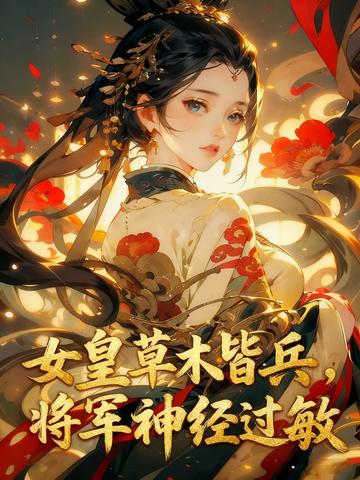
In the first year of Yong'an, seventeen-year-old Zhao Qingyue clutched a string of agarwood beads as she took the throne amid the courtiers' homage. The third bead had been polished bright by her fingertip. It was the last keepsake her mother had pressed into her hand ten years ago, before pushing her into a dry well. The sounds of fighting from that well had already carved the meaning of “the people have no means to live” into her bones.
The court laughed at the new emperor, saying she was more timid than a needle was sharp. A report from the northern frontier arrived half a day late, and she would stare at the map, rubbing the route from Yanmen Pass until her fingertip turned white. If the chancellor raised his voice, she would keep asking about the grain taxes in Jiangnan. Even one idle remark about peonies from her adopted daughter was enough to send her poring over the refugee registers all night. But no one knew that her “seeing danger in every blade of grass” was armor meant to protect the people.
Two men stood by her: General Wei Qianshan of the Northern Garrison, as immovable as a boulder at Yanmen, kept guarding the pass with his spear even after taking three arrows. He always brought wild fruit from the north, saying it would “fill you up.” Censor Meng Guichuan was like ink-dark bamboo from Jiangnan. With nothing but account books, he brought down a corrupt chancellor, and late at night he would warm tea and present her with new policies for improving people's lives.
Floods in Jiangnan stirred up murky waves of ambition, while the Golden Wolf tribes trampled the snowy lands of Yanmen. She snapped the string of beads and finally revealed her edge. Wearing the imperial robes, she struck down the corrupt and opened the granaries to shelter refugees, even sending her adopted daughter to the medical tents to witness the hardships of the world. When Wei Qianshan died in battle, resolved that “one step back means Luoyang,” his armor crusted with blood and frozen snow, she finally shed her last trace of timidity.
The beads were restrung, and the winter plum still bloomed. Over forty years, she made good on her promise that “when the people are at peace, the throne is secure.” In the sixtieth year of Yong'an, the agarwood beads, dried winter plum blossoms, and Records of the People's Livelihood rested together in a brocade box. The court historian wrote: “The emperor was ever mindful of the people's hardships. She guarded the borders with loyalty and courage and brought stability at home with wisdom. For sixty years, no great calamity befell the realm, and the people all remember her.”