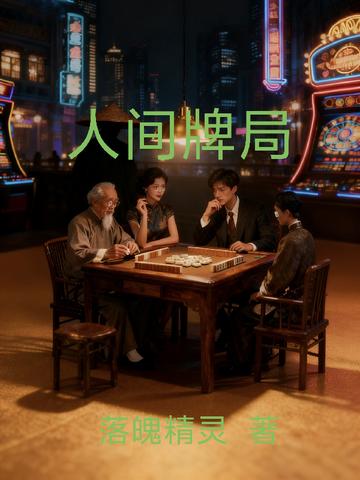
A pair of "Blood Jade Mahjong" that has been passed down for hundreds of years connects the love-hate entanglements and ups and downs of fate across three eras in the four major families of Chen, Wang, Lin and Zhao in Jiangnan. In the late Qing Dynasty, Chen Mingyuan, a descendant of a family of sculptors, and Lin Qingyun, a talented girl, got married because they co-created mahjong. However, their families blocked their relationship and they separated. Chen Mingyuan integrated deep lovesickness into a unique "Blood Jade Mahjong". During the troubled times of the Republic of China, mahjong became popular in Jiangnan and spread to Shanghai. Chen Huairen, the second generation successor, insists on ingenuity, but gradually conflicts with the Wang family who intends to commercialize. However, when the national crisis hit, Wang Shijun, the descendant of the two families, and Zhao Wanru, the daughter of the Zhao family, joined hands in a "Goodwill Mahjong Competition" organized by the Japanese invaders to use cards to outwit the enemy and pass on information. Chen Huairen died heroically to protect the national treasure and his descendants, and the love between Wang Shijun and Zhao Wanru also experienced life and death in the flames of war. Entering the modern era, Chen Yuanzhi, a descendant of the Chen family, is committed to cultural research on the "de-gambling" of mahjong, while Wang Zhenbang, a descendant of the Wang family, values its commercial value. In search of the lost "Blood Jade Mahjong", descendants of the family scattered around the world reunited. In the end, the barriers were dissolved in the understanding of the new generation, and this pair of tiles that witnessed history was donated to the museum, symbolizing the sublimation of Mahjong's market entertainment into a bond that unites families and inherits culture. A history of the development of Mahjong is also a moving epic that writes the emotions, wisdom and inheritance of the Chinese people.