The world is in chaos, the Huns are knocking on the gates, vassal towns are separatist, the courts are decaying, and the etiquette of "women are not allowed to participate in politics" has become a laughing stock. Only the sword and blood can determine the outcome.
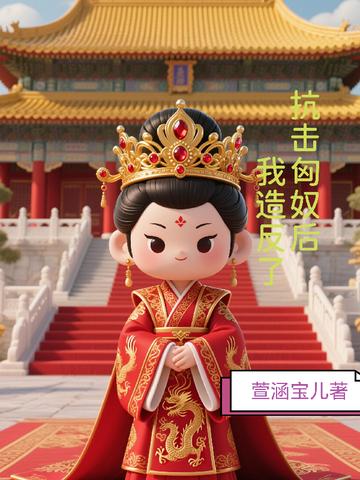
Qin Zhao, the female general and tiger girl, raised her gun and mounted her horse when the Northern Territory was in danger. She used thunderous means to integrate the remaining troops. She killed hundreds of thousands of enemies in a bloody battle with Gao Lang. She expanded the territory for thousands of miles and frightened the barbarians. Due to her outstanding military exploits, she was granted the title of Marquis of the Town. She took charge of the military and political affairs of Northern Territory and became the most dazzling figure in the troubled times.
From Northern Xinjiang to the Central Plains, from Zhenbeihou to the Empress, Qin Zhao's road was paved with mountains of corpses and seas of blood. She defeated the Xiongnu, destroyed vassal towns, cleared the emperor's side, and seized the throne. Wherever she went, the rebels perished and the obedient surrendered. There are no roundabout compromises, only a direct attack on Huanglong; there is no love between children, only a grand plan for hegemony. Throughout her life, she ruled the world as a woman, ruled the world with her killings, and settled the nine provinces with her iron blood. She created a prosperous iron-blooded era where "the phoenix came to the world and all the nations came to court", and became the most controversial but also the most domineering female emperor in history.
Reader comments
If the traditional time-travel novel pursues "refreshing feeling", this work pursues "texture" even more - it cleverly integrates modern thinking with ancient background, and tells a story about "establishing order" with solid tactics, three-dimensional characters, and delicate details.
There is no abruptness of suspension in reading, only a sense of "moistening things silently". People can't help but look forward to the subsequent game of the implementation of the new system, the dealings between Northern Xinjiang and the imperial court, and more sparks of the wisdom of the time travelers blooming in troubled times.
The author's writing is great👍🏻, come on😘😘😘😘
Among ancient Machiavellian novels, the most rare thing is not the shocking twists and turns of the plot, but the delicacy and realism that puts the power struggle into practice. This work does just that.
It does not have a floating "golden finger" or a stereotyped villain. Instead, it takes Qin Zhao's process of establishing a new order in northern Xinjiang as the axis and unfolds a logical and pyrotechnic game between the old and new forces. It is thrilling and extremely believable at every step.
The most successful part of this work is that it returns the power strategy to the essence of "people" and "things". The game of power does not rely on talent, but on the use of rules, insight into people's hearts, and compromise with reality.
It uses solid system design, delicate human calculations, and three-dimensional character creation to tell a story about "breaking the old order and establishing new rules." There is no refreshing feeling of suspension, but there is a sense of "step by step, steady and steady".
If the traditional time-travel novel pursues "refreshing feeling", this work pursues "texture" even more - it cleverly integrates modern thinking with ancient background, and tells a story about "establishing order" with solid tactics, three-dimensional characters, and delicate details. There is no abruptness of suspension in reading, only a sense of "moistening things silently". People can't help but look forward to the subsequent game of the implementation of the new system, the dealings between Northern Xinjiang and the imperial court, and more sparks of the wisdom of the time travelers blooming in troubled times.
The author's writing is great👍🏻, come on😘😘😘😘 Among ancient Machiavellian novels, the most rare thing is not the shocking twists and turns of the plot, but the delicacy and realism that puts the power struggle into practice. This work does just that. It does not have a floating "golden finger" or a stereotyped villain. Instead, it takes Qin Zhao's process of establishing a new order in northern Xinjiang as the axis and unfolds a logical and pyrotechnic game between the old and new forces. It is thrilling and extremely believable at every step. The most successful part of this work is that it returns the power strategy to the essence of "people" and "things". The game of power does not rely on talent, but on the use of rules, insight into people's hearts, and compromise with reality. It uses solid system design, delicate human calculations, and three-dimensional character creation to tell a story about "breaking the old order and establishing new rules." There is no refreshing feeling of suspension, but there is a sense of "step by step, steady and steady".