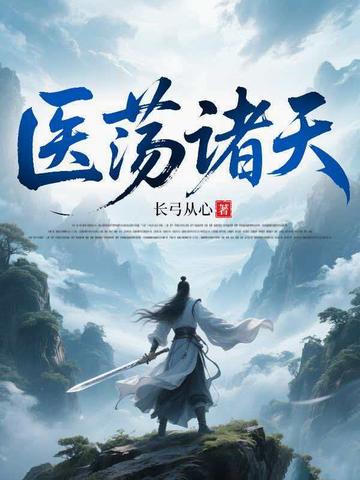
The universe is like a sick body, and all spirits can be cured.
Yunyin brings the supreme inheritance, the needle falls to fill the gap in the sky, and the sword rises to kill the god plague.
The way of heaven will collapse, and all living beings will be in despair. Only he stepped into the rift of chaos alone, using his body as a furnace, divine fire as a guide, and fortune as fuel to burn away the stubborn diseases of the past and rebuild a blue sky!
Reader comments
Traditional fantasy detoxification relies on detoxification pills. This book actually allows the protagonist to use poison as "medicine", using the method of fighting poison with poison in the Qing Sang Sutra, analyzing the properties of poisons and matching elixirs, and transforming the evil poison of the villain into an auxiliary medicine to treat stubborn diseases. This detoxification idea is so subversive of tradition.
The contrast between a doctor holding a sword is so wonderful! The protagonist is not a reckless man, but uses the Taichu Hong Furnace as a "mobile operating room". He is a benevolent doctor when protecting people, and a ruthless person when killing enemies. This kind of character is much more lively than a pure upgrade flow, and the pacing of the 150,000-word series is not sluggish, so I kept chasing it.
I was so nervous watching the part where Arya was treated for energy runaway! It not only has the weirdness of fantasy medical skills - for example, using the Great Furnace of Taichu to refine chaos as a "medicine guide", but it can also directly affect the situation of the battle. It is not just a cheat, it is really relying on medical skills to break the situation. This sense of detail is quite rare in fantasy, and it will be updated in the series!
I just saw that the protagonist was preparing to build an "operating table" for this terminally ill world, and the chapter ended immediately. Now the first thing I do when I open my eyes every day is to check for updates, and to rush to the author's news feed for updates. This setting is really fascinating.
There is a pattern in portraying the whole world as a "sick body". The crack of Qingqiu Diji's soul is "organ damage", Saint Laurent's energy rampage is "disorder of meridians", and even the villains are "cancer". The protagonist's positioning as a "cosmic healer" was immediately established, and it is not a small upgrade.
The part where Arya goes on a rampage with energy really made me happy! Instead of resisting her rampage, the protagonist uses "air-conducting technology" to direct the out-of-control energy to blow up the Ember Skeleton Cult's branch. This not only stabilizes Arya's condition, but also provides the villain's lair, treating illnesses and defeating monsters in one. How did you come up with this operation?
When the protagonist is recuperating Su Jiuer's soul, he also discovers that she has the "hidden poison" of the old god religion in her body. This foreshadowing is so natural. It is not a forced plot, but dug out from the "curing disease". I look forward to how it will be solved later.
Sometimes I even forget that this is a fantasy. The details of the protagonist's treatment are so realistic. For example, when channeling energy to Arya, the tolerance of the meridians has to be calculated. It feels like a real operation, and the tension is full.
Who would have thought that "doctor-patient interaction" can be seen in fantasy? After Su Jiuer wakes up, she will ask the protagonist when her soul will be completely healed. Arya will actively cooperate with the protagonist's diversion technique. These small details make the character alive, not a tool.
What I'm most looking forward to right now is the part where the protagonist uses the Great Furnace of Taichu to refine chaos as "sweet rain". I've mentioned it several times before that this is the key to healing heaven and earth. I don't know how to do it specifically. I hope the author can write the next chapter. I'm already busy updating it!
Medical fantasy is most afraid of being "reskinned and upgraded", but the theme of this book is too realistic - the Taichu Honglu is a medical tool, the Qingsang Sutra is a medical classic, the villain is a "disease focus", and even the world crisis is a "terminal illness", every setting is tied to the theme of "medicine", and there is no deviation at all.
The theme pattern of medical treatment of the world really crushes ordinary fantasy. It is not about making individuals stronger in a trivial way, but using the logic of a doctor to diagnose the world's diseases and prescribe a prescription to save the world. This kind of theme will be different once it comes out.
Heavenly tribulations in fantasy become physical examinations of heaven and earth. Each tribulation is not a punishment, but a test of the health of the world. What the protagonist has to do is not to overcome the tribulation, but to make a comprehensive diagnosis of the world and find hidden lesions during the tribulation. This theme completely reconstructs the meaning of heavenly tribulation.
The thinness of the spiritual energy of the world is written as the lack of energy and blood of the world. The protagonist does not rely on finding the secret realm of spiritual energy, but uses medical hematopoiesis to refine the energy of chaos and replenish the energy and blood of the world. Even ordinary monks can benefit from it. This theme makes the spiritual energy setting more logical.
The power of the stars in traditional fantasy is used for cultivation. This book actually allows the protagonist to use the stars as pulses to diagnose the heaven and earth, use the movement patterns of the stars to correspond to the meridians of the human body, and use the light of the Big Dipper to perform acupuncture late at night. Even stubborn diseases in the world can find the source of the disease based on the trajectory of the stars. This combination of medicine and stars is so imaginative.
The extreme weather of heaven and earth is written as "emotional disease of heaven and earth". Heavy rains are the stagnation of moisture in heaven and earth, and droughts are deficiency of Qi and blood. The protagonist does not use the magic of calling for wind and rain, but prescribes and refines medicine, sets up spiritual healing arrays, and uses medical science to regulate the climate of heaven and earth. This theme brings the pattern of medicine to a new level.
The power of the Five Elements in fantasy is mostly used for offense and defense. This book actually allows the protagonist to use the Five Elements to correspond to the five internal organs. Metal corresponds to the lungs and wood corresponds to the liver. When treating diseases of different races, elixirs and acupuncture methods with different Five Elements attributes are used to treat diseases of different races. Even the villain's evil energy can be diagnosed and treated according to the Five Elements attributes. This medical + Five Elements logic is so smooth.
The space storage in fantasy is just for storing things. The protagonist's storage device is a medical warehouse exclusive to the medical profession. It can store elixirs according to their properties, automatically adjust the temperature and aura, and even temporarily warm the damaged soul. This medical exclusive storage setting is so practical.
Who knows? Cross-dimensional teleportation actually relies on medical positioning. The protagonist uses the boundary pulse diagnosis technique in the Qingsang Meridian to sense the "flow of Qi and blood" in different planes, find a stable teleportation node, and treat the "space crack disease" in the plane channel during the teleportation. This method of teleportation is so unique.
The power of light and shadow in fantasy is used for offense and defense. The protagonist uses light and shadow changes to assist in diagnosing diseases. Light-attribute elixirs can illuminate hidden lesions in the body, and shadow-attribute medical tools can relieve deep blockages. Even Taichu Honglu can switch to light and shadow mode to refine medicine. This combination of medicine + light and shadow is wonderful.
For the first time, I saw that the sect's inheritance does not rely on secret books of exercises, but on the disease files left by doctors of past generations. The protagonist unlocks a medical technique by cracking a file. The file also contains the hidden dangers of the sect. Treatment + inheritance are advanced simultaneously. This inheritance method is so novel.
Change the secret realm trial into a medical trial. The levels in the secret realm are not about defeating monsters, but about solving medical mysteries left by ancient times, such as identifying elixirs that are rare in thousands of years, diagnosing and treating difficult and complicated diseases of ancient remnant souls, and the reward for passing the level is also the inheritance of medical knowledge. This subject is very suitable for medical fans.
For the first time, I saw that the power of faith in fantasy can be used as a "medicine". The more creatures the protagonist saves, the purer the power of faith accumulated. Adding it when refining medicine can improve the efficacy of the medicine, and can even be used to strengthen the "meridians" of the world. This combination of medicine and faith makes the line of salvation more layered.
This is the first time I have seen the integration of ethnic groups in a fantasy genre relying on medical skills. The protagonist uses green bladder meridian to improve the physiques of different races and resolve the congenital defects between races, so that the elves and the Netherworld can share spiritual energy and rely on medical skills to break racial barriers. This theme is too grand.
The author's descriptive skills are amazing, and every scene and situation is lifelike. Readers can almost feel the breeze, the fragrance of flowers, and the emotions of the characters, as if they have personally experienced everything that happens in the story.
The conspiracy is written as a medical trap. The villain does not use poison to kill people, but creates a spiritual barrier to cause the protagonist to misdiagnose. He even tampered with the disease of heaven and earth to mislead the protagonist to prescribe the wrong prescription. This kind of plot that relies on medical games has too much depth.
Who would have thought that dreams can be used as a "diagnostic medium". The protagonist enters the patient's dream, searches for the lesions deep in the soul, and can restore the cause of the disease through the dream. The treatment process is like solving a puzzle. This medical + dream setting is so immersive.
Traditional fantasy is basically about killing and upgrading. This book directly takes "medicine" as the core theme, not a casual element. From healing people's souls to curing stubborn diseases in the world, the whole process revolves around medical skills. This theme really opens up a fresh opening for fantasy.
In traditional fantasy, the speed of time is controlled by magic weapons. This book actually allows the protagonist to use medical skills to change local time, buy treatment time for seriously ill patients, and use the Taichu Hong Furnace to slow down time and finely control fire when refining medicine. This setting of medical time control is so creative.
This is the first time I have seen a fantasy theme that uses traditional medical science so realistically. The protagonist uses "look, smell, ask, and understand" to diagnose the world, and "monarchs, ministers, and envoys" are used to refine medicine. It is not that "medical skills" are used as slogans, but the themes are really integrated into the details of the plot, which looks particularly solid.
Traditional fantasy detoxification relies on detoxification pills. This book actually allows the protagonist to use poison as "medicine", using the method of fighting poison with poison in the Qing Sang Sutra, analyzing the properties of poisons and matching elixirs, and transforming the evil poison of the villain into an auxiliary medicine to treat stubborn diseases. This detoxification idea is so subversive of tradition.
The contrast between a doctor holding a sword is so wonderful! The protagonist is not a reckless man, but uses the Taichu Hong Furnace as a "mobile operating room". He is a benevolent doctor when protecting people, and a ruthless person when killing enemies. This kind of character is much more lively than a pure upgrade flow, and the pacing of the 150,000-word series is not sluggish, so I kept chasing it.
I was so nervous watching the part where Arya was treated for energy runaway! It not only has the weirdness of fantasy medical skills - for example, using the Great Furnace of Taichu to refine chaos as a "medicine guide", but it can also directly affect the situation of the battle. It is not just a cheat, it is really relying on medical skills to break the situation. This sense of detail is quite rare in fantasy, and it will be updated in the series!
I just saw that the protagonist was preparing to build an "operating table" for this terminally ill world, and the chapter ended immediately. Now the first thing I do when I open my eyes every day is to check for updates, and to rush to the author's news feed for updates. This setting is really fascinating.
There is a pattern in portraying the whole world as a "sick body". The crack of Qingqiu Diji's soul is "organ damage", Saint Laurent's energy rampage is "disorder of meridians", and even the villains are "cancer". The protagonist's positioning as a "cosmic healer" was immediately established, and it is not a small upgrade.
The part where Arya goes on a rampage with energy really made me happy! Instead of resisting her rampage, the protagonist uses "air-conducting technology" to direct the out-of-control energy to blow up the Ember Skeleton Cult's branch. This not only stabilizes Arya's condition, but also provides the villain's lair, treating illnesses and defeating monsters in one. How did you come up with this operation?
When the protagonist is recuperating Su Jiuer's soul, he also discovers that she has the "hidden poison" of the old god religion in her body. This foreshadowing is so natural. It is not a forced plot, but dug out from the "curing disease". I look forward to how it will be solved later.
Sometimes I even forget that this is a fantasy. The details of the protagonist's treatment are so realistic. For example, when channeling energy to Arya, the tolerance of the meridians has to be calculated. It feels like a real operation, and the tension is full.
Who would have thought that "doctor-patient interaction" can be seen in fantasy? After Su Jiuer wakes up, she will ask the protagonist when her soul will be completely healed. Arya will actively cooperate with the protagonist's diversion technique. These small details make the character alive, not a tool.
What I'm most looking forward to right now is the part where the protagonist uses the Great Furnace of Taichu to refine chaos as "sweet rain". I've mentioned it several times before that this is the key to healing heaven and earth. I don't know how to do it specifically. I hope the author can write the next chapter. I'm already busy updating it!
Medical fantasy is most afraid of being "reskinned and upgraded", but the theme of this book is too realistic - the Taichu Honglu is a medical tool, the Qingsang Sutra is a medical classic, the villain is a "disease focus", and even the world crisis is a "terminal illness", every setting is tied to the theme of "medicine", and there is no deviation at all.
The theme pattern of medical treatment of the world really crushes ordinary fantasy. It is not about making individuals stronger in a trivial way, but using the logic of a doctor to diagnose the world's diseases and prescribe a prescription to save the world. This kind of theme will be different once it comes out.
Heavenly tribulations in fantasy become physical examinations of heaven and earth. Each tribulation is not a punishment, but a test of the health of the world. What the protagonist has to do is not to overcome the tribulation, but to make a comprehensive diagnosis of the world and find hidden lesions during the tribulation. This theme completely reconstructs the meaning of heavenly tribulation.
The thinness of the spiritual energy of the world is written as the lack of energy and blood of the world. The protagonist does not rely on finding the secret realm of spiritual energy, but uses medical hematopoiesis to refine the energy of chaos and replenish the energy and blood of the world. Even ordinary monks can benefit from it. This theme makes the spiritual energy setting more logical.
The power of the stars in traditional fantasy is used for cultivation. This book actually allows the protagonist to use the stars as pulses to diagnose the heaven and earth, use the movement patterns of the stars to correspond to the meridians of the human body, and use the light of the Big Dipper to perform acupuncture late at night. Even stubborn diseases in the world can find the source of the disease based on the trajectory of the stars. This combination of medicine and stars is so imaginative.
The extreme weather of heaven and earth is written as "emotional disease of heaven and earth". Heavy rains are the stagnation of moisture in heaven and earth, and droughts are deficiency of Qi and blood. The protagonist does not use the magic of calling for wind and rain, but prescribes and refines medicine, sets up spiritual healing arrays, and uses medical science to regulate the climate of heaven and earth. This theme brings the pattern of medicine to a new level.
The power of the Five Elements in fantasy is mostly used for offense and defense. This book actually allows the protagonist to use the Five Elements to correspond to the five internal organs. Metal corresponds to the lungs and wood corresponds to the liver. When treating diseases of different races, elixirs and acupuncture methods with different Five Elements attributes are used to treat diseases of different races. Even the villain's evil energy can be diagnosed and treated according to the Five Elements attributes. This medical + Five Elements logic is so smooth.
The space storage in fantasy is just for storing things. The protagonist's storage device is a medical warehouse exclusive to the medical profession. It can store elixirs according to their properties, automatically adjust the temperature and aura, and even temporarily warm the damaged soul. This medical exclusive storage setting is so practical.
Who knows? Cross-dimensional teleportation actually relies on medical positioning. The protagonist uses the boundary pulse diagnosis technique in the Qingsang Meridian to sense the "flow of Qi and blood" in different planes, find a stable teleportation node, and treat the "space crack disease" in the plane channel during the teleportation. This method of teleportation is so unique.
The power of light and shadow in fantasy is used for offense and defense. The protagonist uses light and shadow changes to assist in diagnosing diseases. Light-attribute elixirs can illuminate hidden lesions in the body, and shadow-attribute medical tools can relieve deep blockages. Even Taichu Honglu can switch to light and shadow mode to refine medicine. This combination of medicine + light and shadow is wonderful.
For the first time, I saw that the sect's inheritance does not rely on secret books of exercises, but on the disease files left by doctors of past generations. The protagonist unlocks a medical technique by cracking a file. The file also contains the hidden dangers of the sect. Treatment + inheritance are advanced simultaneously. This inheritance method is so novel.
Change the secret realm trial into a medical trial. The levels in the secret realm are not about defeating monsters, but about solving medical mysteries left by ancient times, such as identifying elixirs that are rare in thousands of years, diagnosing and treating difficult and complicated diseases of ancient remnant souls, and the reward for passing the level is also the inheritance of medical knowledge. This subject is very suitable for medical fans.
For the first time, I saw that the power of faith in fantasy can be used as a "medicine". The more creatures the protagonist saves, the purer the power of faith accumulated. Adding it when refining medicine can improve the efficacy of the medicine, and can even be used to strengthen the "meridians" of the world. This combination of medicine and faith makes the line of salvation more layered.
This is the first time I have seen the integration of ethnic groups in a fantasy genre relying on medical skills. The protagonist uses green bladder meridian to improve the physiques of different races and resolve the congenital defects between races, so that the elves and the Netherworld can share spiritual energy and rely on medical skills to break racial barriers. This theme is too grand.
The author's descriptive skills are amazing, and every scene and situation is lifelike. Readers can almost feel the breeze, the fragrance of flowers, and the emotions of the characters, as if they have personally experienced everything that happens in the story.
The conspiracy is written as a medical trap. The villain does not use poison to kill people, but creates a spiritual barrier to cause the protagonist to misdiagnose. He even tampered with the disease of heaven and earth to mislead the protagonist to prescribe the wrong prescription. This kind of plot that relies on medical games has too much depth.
Who would have thought that dreams can be used as a "diagnostic medium". The protagonist enters the patient's dream, searches for the lesions deep in the soul, and can restore the cause of the disease through the dream. The treatment process is like solving a puzzle. This medical + dream setting is so immersive.
Traditional fantasy is basically about killing and upgrading. This book directly takes "medicine" as the core theme, not a casual element. From healing people's souls to curing stubborn diseases in the world, the whole process revolves around medical skills. This theme really opens up a fresh opening for fantasy.
In traditional fantasy, the speed of time is controlled by magic weapons. This book actually allows the protagonist to use medical skills to change local time, buy treatment time for seriously ill patients, and use the Taichu Hong Furnace to slow down time and finely control fire when refining medicine. This setting of medical time control is so creative.
This is the first time I have seen a fantasy theme that uses traditional medical science so realistically. The protagonist uses "look, smell, ask, and understand" to diagnose the world, and "monarchs, ministers, and envoys" are used to refine medicine. It is not that "medical skills" are used as slogans, but the themes are really integrated into the details of the plot, which looks particularly solid.