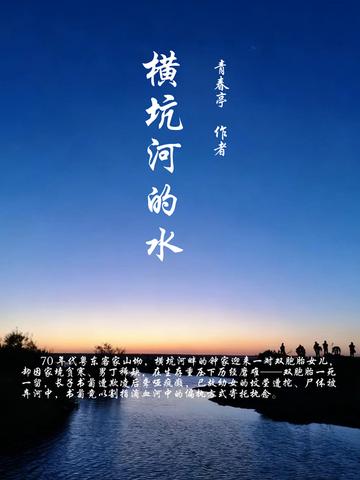
Introduction to the work "The Water of Hengkeng River"
In the Hakka Mountains in eastern Guangdong in the 1970s, the Zhong family on the Hengkeng River welcomed a pair of twin daughters. However, due to the poverty of the family and the scarcity of boys, they experienced hardships under the pressure of survival. One of the twins died and the other remained. The eldest son Shuju was bullied and became deaf-mute and went crazy.
The first half of the story revolves around Zhong Qinghua's encounter with various people and things during confinement after giving birth to twins. The second half revolves around the clues about the upbringing of the surviving twin Jingju. From the sisters and their younger sister who were bullied while studying and in danger at home, to living with their father but being rejected by the school and seeking refuge with relatives, it recreates the life of parents in rural areas in the 1970s who were short-tempered and struggled to make ends meet in the fields.
The work uses the daily routine of fireworks in the Hakka countryside as the background, and incorporates folk customs such as weddings, festivals, and ancestor worship. It depicts the appearance of small people who protect their families with tenacity and simplicity and grow toward the sun amidst policy changes and life ups and downs. The flowing water of the Hengkeng River carries the youthful memories of a generation and reflects the moving glimmer of ordinary life.