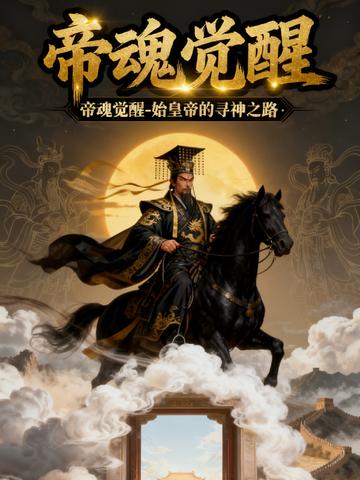
In 215 BCE, the Fengshan ceremony was held on Mount Tai. The rites were completed, but heaven gave no sign. As Li Si led the officials in kneeling and crying, “Heaven’s mandate is fulfilled,” Emperor Qin Shi Huang gazed at the gloomy sky and, for the first time, asked himself: Was the so-called “Mandate of Heaven” a blessing bestowed by the gods, or a shackle used to control all living beings?
His doubts became a thunderclap after he personally ventured into the underground ruins of Yin: on a shattered stone wall bearing the Mandate of Heaven, the remnant soul of Shang Zhou wept blood as it whispered, “I did not fall to King Wu of Zhou. I fell only to the erasure wrought by the Mandate of Heaven.” In that moment, the “Imperial Soul” lying dormant within Ying Zheng fully awakened, planting the seeds of a civilizational uprising that would span three thousand years.
Using the Records of the Grand Historian and the Book of Han as historical anchors, this book constructs a radical truth amid the strange accounts and gaps in official history: the “Mandate of Heaven” is a control System left behind by an ancient civilization, “divine authority” is the System’s enforcement mechanism, and dynastic succession is merely the System’s regular reboot. Ying Zheng becomes the first “Heavenbreaker.” He burns books to purge infected texts from the System, buries scholars alive to root out spies of divine authority, builds the Great Wall to seal the rift in Heaven’s Gate, and constructs Epang Palace to connect to the Emperor’s consciousness archive. Every act of “tyranny” condemned by the historical records is a hidden stratagem in his struggle against the laws of Heaven. In the end, he falls to the System’s counterattack. His death at Shaqiu, supposedly from illness, is really the disintegration of his physical body. His achievements are rewritten, and his reputation is smeared. But the spark never dies...