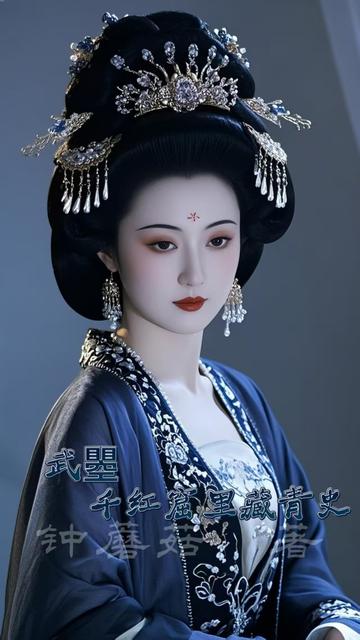
Told from Wu Zetian's perspective, this book unfolds the epic story of women's lives in the Tang dynasty, tracing her journey from “orphaned in childhood, constrained in youth, dominant in middle age, and lonely in old age.” Through the perspectives of Princess Taiping, Shangguan Wan'er, and the Yang women, it also weaves a tapestry of countless women's fates. The “female emperor” of the official histories is, here, “A Wu” of Bingzhou chasing locust blossoms, a talented woman hiding scraps of military strategy in the palace, a mother collapsing as she holds Princess Anding, and an old woman stroking a little wooden comb in Shangyang Palace.
From clutching her father's keepsake when she entered the palace at fourteen, to praying for survival in the Ganye convent; from the lock of her daughter's hair in a jade pendant when she deposed Wang and made herself empress, to the loneliness of the throne after ascending it at Zetian Gate; from the guilt of dreaming of Li Xian and hearing his questions, to the peace of reclaiming the title “Empress” at the end of her life. The book captures the weight of history, from the civil service examinations to the Shenlong coup, while also filling in the gaps: how she once envied the freedom of tea-picking women in Shu, burned her notes over the accusation that women should not meddle in politics, planted peonies while thinking of her mother, and choked up when Princess Taiping questioned her.
A little wooden comb, The Strategy for Conquering Sui, and an old collection of poems link the story from beginning to end, bringing the “female emperor” back to being human. The Yang women's endurance, Xu Hui's regrets, and Shangguan Wan'er's struggles turn the palace into a stage where women search for glimmers of hope. The blank stele at Qianling Mausoleum is the perfect epitaph for her life: joys, sorrows, and tenderness left unwritten in the official histories, hidden in the years after countless blossoms have fallen.