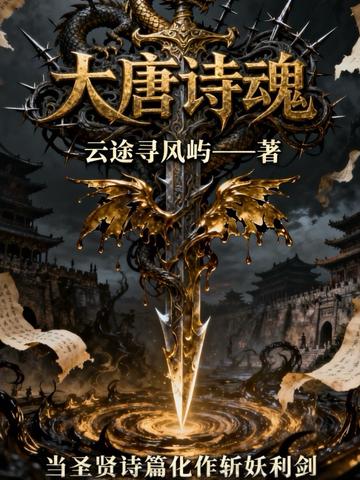
[Fantasy + Genius + Defense + Context + Inheritance + Confrontation] In 676 AD, Wang Bo wrote "The Falling Clouds and the Solitary Eagles Flying Together", which amazed the world, but he drowned in the South China Sea and died at the age of twenty-seven.
The world thought that the genius was gone, but they did not know that his overflowing talent and unwillingness condensed into a "poetic soul" that wandered around the Tang Dynasty for hundreds of years - his memory was sealed, and only the beauty and love between heaven and earth could awaken his spiritual consciousness for a moment.
A hundred years later, in the late Tang Dynasty. Luo Yin failed ten scientific examinations and wandered around Tengwang Pavilion in despair. He actually saw fragments of poems that were invisible to others in the water marks on the wall.
That night, the green-shirted figure fell into a dream, chanting "There is a confidant in the sea", as magnificent as before.
One is a lonely poet who is trapped in time, and the other is a frustrated scholar from a poor family. Bodies spanning hundreds of years meet here:
Wang Bo used the soul of poetry as a guide to convey his character of the early Tang Dynasty; Luo Yin used the human world as an anchor to retrieve his memory.
But the closer you get to the truth, the more frightened you become - it is no accident that Wang Bo's soul remains in the world. "Preface to Prince Teng's Pavilion" is the key to guarding the cultural context, and his poetic soul is the last line of defense against "literary evil" and to protect civilization from being annihilated!
When the Tang Dynasty is about to collapse in the last days, two frustrated geniuses must use their pens as swords and their souls as fire:
Not only did he want Luo Yin to become famous outside the imperial examination hall, but he also wanted to keep the last spark of immortal poetic soul in this world!
See how a century-old soul of poetry meets a confidant in this life, and in the storm of the late Tang Dynasty, he writes a legend of "protecting the Tao with poetry"!