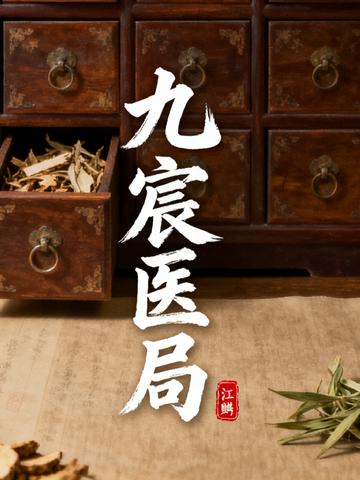
In the 23rd year of the Republic of China, Gu Yanzhi, the young owner of "Cunrentang" in Shanghai, was sorting out the medical books left by his grandfather and found a "Jiuchen Secret" with a human skin map sandwiched between it. The map points to an abandoned "Chenzhou Medical Bureau" in western Hunan, where it is rumored that a "resurrection pill" that can bring people back to life is hidden there. Gu Yanzhi went there with the medical bureau's token of bronze medicine, but the moment he stepped into the medical bureau, he was involved in an infinite reincarnation - every time he died, he would go back to the morning before he entered the medical bureau.
During the reincarnation, he met Su Jiu'ao, a girl who robbed the underground palace of the Medical Bureau. The fragment of "Qingwu Jing" in her hand could decipher the Yin and Yang formation, and could be combined with Gu Yanzhi's "Jiuchen Secrets" to form a complete map. From suspicion to joining forces, the two gradually discovered that the key to reincarnation was hidden in the "Nine Palaces Medical Array" of the medical bureau: from the meridian acupuncture points corresponding to the sixty-four hexagrams in the "Book of Changes" to the taboo medicinal properties of "Soul-Calming Grass" in "Compendium of Materia Medica"; from the secrets of the power struggle in the Imperial Hospital in the Ming Dynasty, to the combination of corpse exorcism and traditional Chinese acupuncture in Western Hunan. Weird resonance; from the bronze coffins engraved with "Ziwu Liuzhu" in the underground palace to the pulse tattoos on the wrists of each corpse corresponding to the solar terms... Every reincarnation is a gamble of exchanging lives for answers, and the final truth is related to the taboo of "living people refining medicine" that has been deliberately erased in the inheritance of traditional Chinese medicine.