Many years later, Qian Zhongshu continued to use lamps as metaphors in the Republic of China literature class at Tsinghua University.
He lit the glass lamp and said with a smile: "This is Hu Shi, the leader of new literature."
He turned on the copper desk lamp and said in a solemn tone: "This is Lu Xun, the dagger that pierced the dark night."
He lit the ram's horn lantern and sighed softly: "This is Shen Congwen, the moonlight in western Hunan."
He opened the wooden window and let the Peiping locust breeze pour in. He raised his voice and said, "This is Chen Yinke, the mountain of academia."
The students in the audience asked: "Sir, who is that smell of fireworks and books and ink that permeates the alleys?"
Qian Zhongshu tapped the edge of the window with his fingertips, looking through time and space at the lights of the Shanghai newspaper office, and said loudly: "That is Lin Yan, using his pen as a boat, carrying the soul of thousands of books in the future through the troubled times.
A wall-breaker in the literary world who uses copy as a blade to destroy the shackles of rules and create a new realm! "
It is the "literary courage of the Republic of China" that straddles the old and the new, and integrates classical and vernacular. It makes the Zhang-Huang School nod and fans of the new ideological trend are impressed. It is an immortal name in the Shanghai Newspaper Office that stirred up the national ideological trend with a pen and ink! "
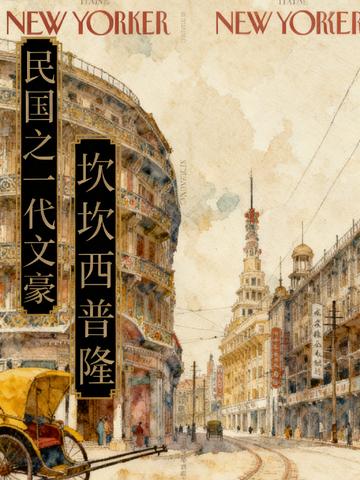
Short version: On a rainy night in a Shanghai alley in 1925, Lin Yan returned with the spirit of future generations. Copying classical Chinese, changing classics, and writing vernacular, he fought his way through the confrontation between the Zhanghuang School and the new trend of thought. With the courage to "dare to copy, dare to change, and dare to break things", he became a "literary hero of the Republic of China" that straddled the old and new. He stirred up the situation in Shanghai with his pen and ink and became a benchmark in the literary world that has engraved the times.
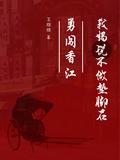
This book is also known as: "The Years I Copied Books in Shanghai" and "Don't Even Dare to Change the Classics?" Then what kind of literary giant are you?
Reader comments
There is style and thought, but the tone is too preachy and the content is empty.
The literary spirit is good, but the sharpness is not enough.
Although the pace is fast and the structure is compact, the writing style is quite good. Even though some of the text feels a bit sugary and chicken soup, it does not affect the enthusiasm and enjoyment of reading it.
There is style and thought, but the tone is too preachy and the content is empty.
The literary spirit is good, but the sharpness is not enough.
Although the pace is fast and the structure is compact, the writing style is quite good. Even though some of the text feels a bit sugary and chicken soup, it does not affect the enthusiasm and enjoyment of reading it.
Great book, highly recommended!