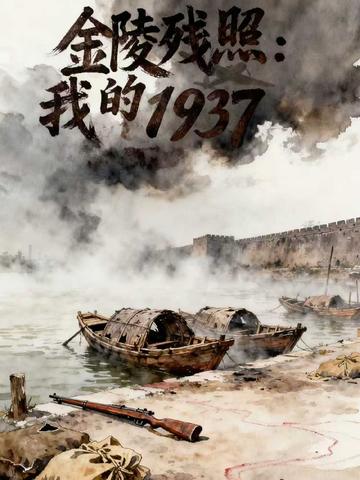
When the cold Yangtze River water swept Lin Rui away from the fishing bank in the 21st century, when he opened his eyes again, he was standing at the Xiaguan Pier in Nanjing in November 1937 - less than twenty days before the Nanjing Massacre. ?
As a retired scout, his mind is filled with modern military knowledge and the shocking black and white photos in the memorial hall. He clutched the August 1st Army emblem in his pocket, thinking that with this ability, he could always stop something: maybe the ferry that was burned down at Xiaguan Pier, maybe the compatriots who were about to be targeted by the Japanese army's butcher knife, even if it was just to save a woman like Shen Qingyao - the girl who was bullied by the soldiers in the inn, holding a silver lock and looking for her husband who was guarding the city. ?
He put on a coarse cloth gown, exchanged military emblems for oceans, and drew Nanjing city defense maps all over the table of the shabby inn, planning guerrilla warfare, supply lines, and civilian evacuation routes. But reality hit hard: Tang Shengzhi's insistence on the order cut off the retreat, the remnants of the national army grabbed the ship and fled, the five-yuan ocean ticket could crush a family, and the roar of Japanese aircraft was getting closer and closer. He could defeat two evil-doing soldiers, but he could not stop the chaotic people; he could find a wooden boat to escape, but he could not hide from the patrolmen's guns; he could give Shen Qingyao a temporary shelter, but he could not promise her a living tomorrow. ?
The wheel of history is rolling forward, and he is like a grain of sand trying to jam the gears. The fire of hope that he tried his best to ignite seems so weak in the sky full of artillery fire. When the gunshots at the Zhonghua Gate rang out, and when the corpses on the riverside began to float, Lin Rui finally understood: There is some darkness that cannot be illuminated by one person's courage.