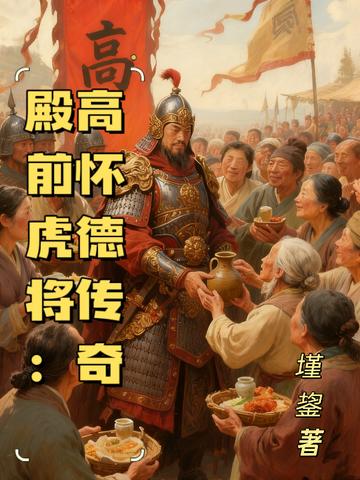
Introduction to the work "Tiger General in the Palace: The Legend of Gao Huaide"
This is a historical legend based on the life of the famous Northern Song Dynasty general Gao Huaide. It connects the four major stages of "youth growth - Zhou Dynasty's achievements - Song Dynasty establishment - inheritance in his later years", and three-dimensionally restores a model military general who is "wisdom and brave, kind and caring for the people, and transparent and aware of retreat".
When he was young, he was the son of a general of the Later Jin Dynasty. He showed his sharpness with one arrow and two eagles. He first wore armor to protect the grain road, used "grain cart formation" to defeat the Liao cavalry, and transformed from a playboy to a new star on the battlefield. In the following years, he followed the world During Zong's southern and northern campaigns, he led thirty cavalry to sneak across the Huaihe River to capture enemy generals. He set fire to attack Lianzhu Village in the Southern Tang Dynasty, and charged even though a stray arrow pierced his arm. He even used the combination of toughness and softness to "press his head into the ice water but not kill indiscriminately" and became the most relied upon in the army. The commander-in-chief; when Chen Qiao rebelled, he had an insight into the current situation and refused to fight on the grounds of "avoiding the fire of war to protect the people", showing his transparency; after entering the Song Dynasty, he helped Taizu put down the rebellion, but refused the royal estate and resigned from the military power first , To avoid the risk of earthquakes due to high achievements; when guarding the local area, he opened warehouses to release grain for disaster relief, visited the poor and reduced taxes in disguise, and even pretended to be a salesman to persuade bandits to surrender.
In his later years, he was still able to wear armor and climb to the top of Taiyuan City to protect young generals. Before his death bed, he even lectured his descendants on the principle that "military power is a double-edged sword, and protecting the people is the foundation." Until his death, people from all over the country cried and sent grain to him. Taizong himself wrote an inscription naming him "loyalty to the people". His "Breaking Formation Music" was passed down to the court and people, and his family mottos and agricultural skills were passed down from generation to generation. The inscription on Gui De's "Love for the People Stone" reads "The virtues of the Duke are like the spring breeze", which eventually became the best footnote of his life that "loyalty is not foolish loyalty, and love for the people is the foundation".
I love writing novels, the content is so exciting