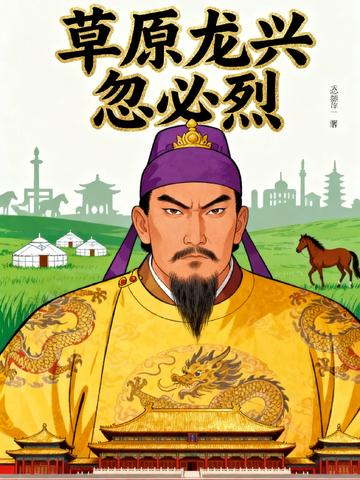
Kublai Khan (1215-1294) was the fifth Great Khan of the Mongolian Empire and the founding emperor of the Yuan Dynasty. His temple name was Shizu, and his posthumous title was the Shengde Shenggong Civil and Military Emperor. He is the son of Torre and the grandson of Genghis Khan. He has been influenced by Han culture since childhood and possesses both the bravery of the grassland people and the wisdom of governing the country in the Central Plains.
In his early years, Kublai Khan was ordered to govern Henan. He promoted benevolent governance, encouraged farming and mulberry farming, and reused Han officials, thus accumulating rich experience in governing the country. After going through the game of the Khuliltai Conference, quelling the rebellions of Queen Naimazhen and Alibuge, and consolidating his throne, he changed the name of the country to "Dayuan" in 1271 and made his capital Dadu (today's Beijing).
Militarily, he mobilized the whole country to conquer the Southern Song Dynasty. After six years of fighting at Xiangyang, he broke the Yangtze River defense line. In 1279, he destroyed the Song Dynasty at the Battle of Yashan and completed the unification of the country. He established a unified dynasty with an unprecedentedly vast territory. The territory reached Mobei in the north, the South China Sea in the south, Central Asia in the west, and the Korean Peninsula in the east.
In terms of governing the country, he implemented the provincial system and strengthened centralization; formulated taxes according to local conditions to promote the development of agriculture, industry and commerce; built the Grand Canal to improve north-south transportation; respected the cultural customs of all ethnic groups, promoted ethnic integration and Sino-foreign exchanges, and made the capital a prosperous international city in the world.
Kublai Khan possessed outstanding talents as a military strategist and statesman throughout his life. He not only used force to achieve unification, but also governed the empire with enlightened policies. He laid the foundation for the stability and development of the Yuan Dynasty and had a profound impact on China's territorial pattern and ethnic integration.