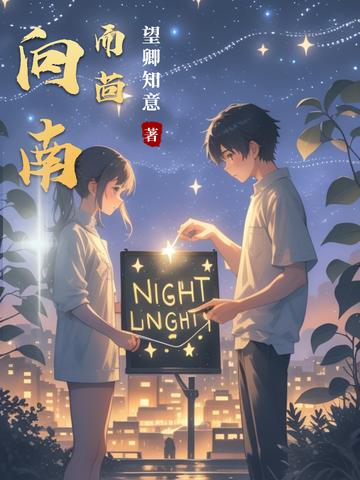
Towards the South, Back to Hui means “heading south, toward Zhi Nan, and returning home, to Hui.” It suggests that each is the other's homecoming, a deeply romantic and beautifully layered title.
Seventeen-year-old Xia Hui feels as if she is living in a grand performance. To her parents, she is an exam candidate who needs to work harder; to her teachers and classmates, she is a quiet, introverted, ordinary girl. Only in the doodles in her notebook and on the anonymous forum app Starsea does she dare voice her uncertainty and doubts about the future: “Study hard, get into college, and then what? Is there really only one right answer to the meaning of life?”
Twenty-one-year-old Zhi Nan lives in a world of code, KPIs, and endless overtime. New to the working world, Starsea is the only outlet for his exhausted soul. Then he sees a user named Xia Hui post a pointed question. He replies with the cool practicality of someone life has worn down: “A degree is a ticket through the door. It gives you the right to choose.”
That rational reply unexpectedly becomes the connection between two lonely planets. He logs on when she finishes evening study sessions; she leaves messages while he rides the subway to work. From obscure music to everyday minutiae, their souls begin to resonate across the hours between them.
But when their online rapport enters the real world, their differences become impossible to ignore. She is sensitive and independent, rebelling against the mainstream path; he is quiet and exhausted, letting actions speak where words fail. When Xia Hui resolutely chooses to leave school and pursue her faint hope of becoming an illustrator, a vast gulf of reality opens before them.
Their encounter begins in Starsea, but it is in the real world that they must face their harshest test.



At the intersection of youth literature and realistic themes, "Anise to the South" is like a clear stream. With its unique "realistic gravity" narrative, it profoundly depicts the moving story of two sensitive souls groping in their own maze of life, and finally lighting the way forward for each other. This is not only a love novel, but also a growth epic of a generation of young people searching for the value of their own existence in the pull between ideals and reality. The most touching core of the novel lies in its precise portrayal and deep empathy of the trait of "sensitivity". The sensitivity of the heroine Xia Hui points to the call of inner art and the rebellion against external discipline; the sensitivity of the hero Zhinan is reflected in the dependence on the logical world and the alienation from external emotions. The author does not romanticize this sensitivity, but truly shows how it can become a sharp blade to stab each other, and how it can also become the most accurate tentacles for sensing each other's temperature. Their love is not redemption, but a long exercise - practicing bravery, practicing communication, and practicing finding a position in each other's coordinate system where you can stand and dance with them. The pattern of the story is not limited to the world of two people. The setting of best friend Lin Eucalyptus and her "180-person army of handsome men" is by no means a simple eye-catcher, but rather creates a broader portrait of young people. Lin Yu's "strategic dropout" and Xia Hui's "idealized dropout" form a sharp and interesting contrast, and together they explore the diverse possibilities for young people to break through a single path to success in the current era. This story line brings not only a sense of refreshment, but also in-depth questioning and speculation on mainstream values, which greatly enriches the connotation of the work. As the starting point of the story, the "Xinghai" APP is a wonderful metaphor. It symbolizes contemporary people's deep desire to be "seen", as well as the contradictions and demands for finding true resonance in anonymous social interactions. From the virtual resonance of the "Sea of Stars" to the clumsy running-in of the "human world" to the joint creation of the brand "Land of the Stars South", the author skillfully completes the closed loop from spiritual comfort to realistic co-creation, giving this relationship the power to solidly ground itself. All in all, "Southern Fennel" successfully tells a good story about love, growth and choice with its delicate writing, real characters and profound realistic concerns. It tells us that love is not about finding a perfect partner, but using your imperfect selves to learn companionship and respect, and ultimately draw a unique map of life together. In Xia Hui and Zhinan's "Going South" journey, each of us may be able to see the confusion and persistence about the future that we have experienced or are currently experiencing.