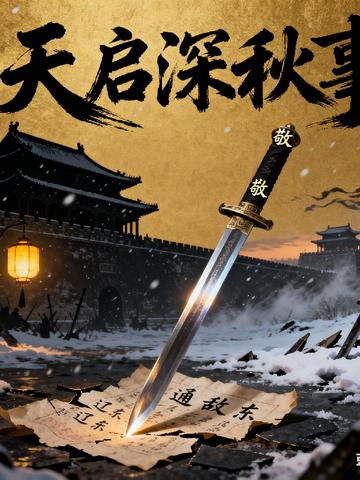
In the twenty-third year of the Apocalypse, the Fushun Pass was broken. The Jianzhou Jurchen's iron hoof crushed the autumn silence of Liaodong and tore apart the hypocritical tranquility of the Ming Dynasty.
Zhang Jingzhi, the chief minister of the cabinet, stood in the shadow of the Zichen Palace, looking at the frail emperor on the dragon throne, and at the vassal kings and ministers below who had their own evil intentions. He knew that a storm involving power, war, and the country was inevitable. The emptiness of the treasury is ironclad evidence of collusion between the Secretary of the Ministry of Finance and the salt merchants; the discord between the border generals hides the hidden hand of the vassal king who covets the artifact; behind the war in Liaodong, there is an undercurrent of the Jurchen tribe's struggle for the throne.
He used his cunning and calculation as a chess piece and the court situation as a chessboard. He not only wanted to eliminate the officials and punish the moths, raise military funds to strengthen the border defense, but also check and balance the power of the ambitious King Rui. He also needed to find a glimmer of hope for the Ming Dynasty in the cracks of the Jurchen civil strife. The second son Zhang Ruoyun, who had just entered the court, returned with his knowledge from his study tour in the south of the Yangtze River. He glimpsed the deceitfulness of people's hearts in the treacherous clouds, and became the most unexpected piece in his father's chess game.
When the flames of war shine through the palace walls, and when calculations overwhelm loyalty, who can stand firm in this strangulation of power? Who can hold up the last pillar of Ming Dynasty when the building is about to collapse? This is a story about intrigue, perseverance and choice. In the turbulent years of Tianqi, it depicts the shadows of swords and the feelings of family and country in the depths of the court.