In the bleak wind and smoke of the late Tang Dynasty, Li Shangyin used poems as paper, writing down the pages full of loneliness and tears. This book follows his ups and downs in life and goes into the depths of those hazy poems.
From the sorrow of traveling alone in "leaving dry lotuses to listen to the sound of rain", to the confusion and melancholy of "fifty strings of brocade strings for no reason"; from the weeping and affectionate "spring silkworms will die before the silkworms die", to the uncertain return date of "the night rain sends north", every line of the poem is a code, and every drop of tear hides the unsaid thoughts.
His loneliness is the frustration of his official career amid the squabbles between Niuli and Li, the regret in love that cannot be conveyed, and the lament of the times when he was born at the wrong time; his tears are the bitterness dripping on the poems, the forbearance hidden in the allusive images, and the silent sobs of the literati's character in troubled times. By unlocking these codes and understanding these tears, you can understand Li Shang's soul monologue hidden in his poems, and you can also understand the common spiritual dilemma and immortal poetic persistence of late Tang literati.
Reader comments
"Speaking of the "difficulty of feeling" in the Tang Dynasty, Tang Yin is the same, and Li Shangyin is even more so - he put all the loneliness into his poems: the fifty strings of "Jin Se" are the regrets that have not been fully expressed, and the autumn pond in "The Night Rain Sends to the North" is the longing that has been dried up. I put it The "code of loneliness" in these poems is fully explained in "The Code of Loneliness in Li Shangyin's Poems". It is not a boring annotation, but an emotional resonance across thousands of years: the original loneliness of the poets of the Tang Dynasty was exactly the same as ours now. # #"
"Who knows! Reading "The Code of Loneliness in Li Shangyin's Poems" is like opening a blind box - the "loneliness" of each poem is revealed: the "wandering" in "Jin Se" is the regret that has been hidden for half a life, and the "Autumn Pool" in "Night Rain Sends to the North" is the emptiness of not waiting for a reply. The author boiled Tang poetry into empathetic emotions. After reading it, I immediately want to dig out Li Shangyin's poems and read them ten times! Five stars are not enough praise!"
Li Shangyin is one of the most representative poets in the late Tang Dynasty. His poems are famous for their hazy and obscure artistic conception, exquisite and beautiful language, and deep and delicate emotions. They occupy a unique position in the development of Tang poetry.
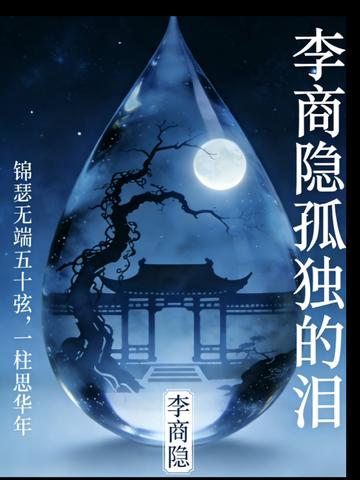
"Speaking of the "difficulty of feeling" in the Tang Dynasty, Tang Yin is the same, and Li Shangyin is even more so - he put all the loneliness into his poems: the fifty strings of "Jin Se" are the regrets that have not been fully expressed, and the autumn pond in "The Night Rain Sends to the North" is the longing that has been dried up. I put it The "code of loneliness" in these poems is fully explained in "The Code of Loneliness in Li Shangyin's Poems". It is not a boring annotation, but an emotional resonance across thousands of years: the original loneliness of the poets of the Tang Dynasty was exactly the same as ours now. # #" "Who knows! Reading "The Code of Loneliness in Li Shangyin's Poems" is like opening a blind box - the "loneliness" of each poem is revealed: the "wandering" in "Jin Se" is the regret that has been hidden for half a life, and the "Autumn Pool" in "Night Rain Sends to the North" is the emptiness of not waiting for a reply. The author boiled Tang poetry into empathetic emotions. After reading it, I immediately want to dig out Li Shangyin's poems and read them ten times! Five stars are not enough praise!"
Li Shangyin is one of the most representative poets in the late Tang Dynasty. His poems are famous for their hazy and obscure artistic conception, exquisite and beautiful language, and deep and delicate emotions. They occupy a unique position in the development of Tang poetry.