When Huo Qubing was seventeen years old, the emperor granted him a marriage and a mansion.
I stood in front of the Weiyang Palace and said categorically: "The Huns are not destroyed, so why should we take care of our family!"
The whole court was shocked, and His Majesty was moved.
I thought life was about making meritorious deeds on the battlefield and being a wolf.
Until the lone army went deep into the Dragon City, they broke through the Xiongnu Blood Sacrifice Evil God, and discovered that my bloodline was actually the key to opening the "Door to Foreign Lands" under Weiyang Palace!
In the court, the "Qingque" hides, colludes with foreign enemies, and plots to complete the final ceremony with the prince's blood.
Traveling thousands of miles to the west, the demonic shadow follows him. The so-called immortality is actually the plan of the evil god from outside the territory.
Since my blood is the key,
Then use this passion to conquer Mobei first, and then lock the door!
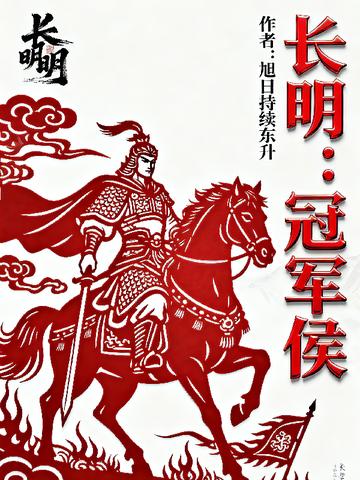
I am Huo Qubing. In this life, I will not only be a champion, but also guard the gate of China - the God of War on Earth!
Reader comments
This paragraph uses epic writing to complete the ultimate casting of Huo Qubing's image, symbolically welding personal destiny and national spirit. The metaphor of "meteor" forms the core trick - the author uses "burning" and "short-lived like flame" to eliminate the records of illness and death of military generals in history books, and replaces them with self-destructive burning full of aesthetic violence. The most fatal literary gear lies in the verb combination of "penetrating" and "casting": the piercing image of the "arrowhead" forms a paradox with the eternity of the "military soul", implying that Huo Qubing must complete the eternal infusion of the nation through self-consumption. The last sentence, "hot heartbeat", reheats the cooled history, exposing the narrator's contemporary intention of trying to warm the history books with his body temperature.
This paragraph uses epic writing to complete the ultimate casting of Huo Qubing's image, symbolically welding personal destiny and national spirit. The metaphor of "meteor" forms the core trick - the author uses "burning" and "short-lived like flame" to eliminate the records of illness and death of military generals in history books, and replaces them with self-destructive burning full of aesthetic violence. The most fatal literary gear lies in the verb combination of "penetrating" and "casting": the piercing image of the "arrowhead" forms a paradox with the eternity of the "military soul", implying that Huo Qubing must complete the eternal infusion of the nation through self-consumption. The last sentence, "hot heartbeat", reheats the cooled history, exposing the narrator's contemporary intention of trying to warm the history books with his body temperature.