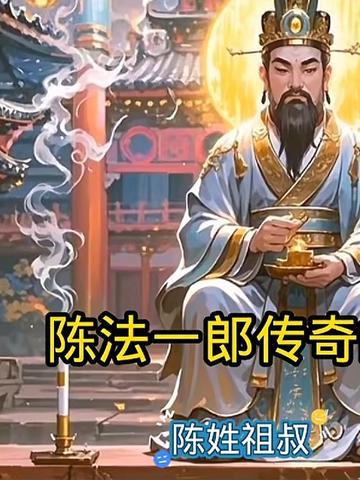
Introduction to the work "The Legend of Chen Manichiro"
This work is based on the true legend of Chen Wanyilang (Tao Delai), the folk god and ancestor of the clan in the Hakka area in eastern Guangdong during the Ming and Qing Dynasties. It combines the spirit of the immortal and the heroic spirit with the Hakka folk customs, and tells a legendary life of helping the world, calming the people, and being righteous.
During the Hongwu period of the Ming Dynasty, Chen Delai, a young man from Tingzhou Prefecture, went south with his best friend Hu Fawang to avoid being recruited by the government and treat his sick mother. By chance, he became a disciple of the Maoshan sect and learned unique skills such as Qi Men Dun Jia and spell formations. After completing his studies and coming down from the mountain, he became the "Five Righteous Brothers" with like-minded Zhang Faqing, Liao Boerlang, and Wei Shilou. With his original intention of "helping the needy and protecting his neighbors," he traveled to Xingning, Wuhua, Fengshun and other places. They may have outsmarted bandits, quelled the Chaozhou rebellion, and been awarded the title of "Guardian of the Country"; they may have solved locust plagues and plagues, and protected the people's well-being with Taoism; or they may have built stone bridges, diverted water, and improved people's livelihood with benevolence.
From the young chivalrous man who studied Dharma in Maoshan, to the hero who defended the country who led the brave warriors in the countryside, and then to the "Chen Shengye" who was respected by all people, Chen Wanyilang always adhered to his true nature of chivalry throughout his life. The work not only restores his passionate past of bonding with his brothers and studying Dharma in Maoshan, but also shows the Taoist legend of moving mountains and seas, exorcising evil and avoiding plague, and also portrays the unity and inheritance of Hakka clans and the long history of folk beliefs - the incense continues in the Chen Wanyilang Palace in Mianyang Town, the birthday celebrations on the 19th of the first lunar month are passed down from generation to generation, and the custom of hanging "Shengye Talisman" on the Dragon Boat Festival is integrated into the texture of Hakka life.
The whole book is set against the background of a magnificent era, and connects multiple themes such as clan migration, folk beliefs, and peace of mind in troubled times.