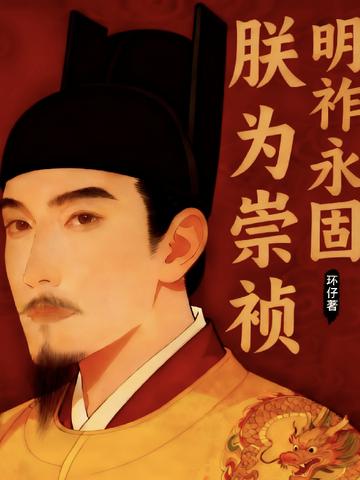
Jiang Chen, a graduate student in the Department of Contemporary History, accidentally traveled to Zhu Youjian seven years after Tianqi. At that time, the Ming Dynasty was plagued by internal and external troubles: the imperial palace was like a sieve, and the hands of foreign dynasties were reaching out to the inner court. The factions in the court are fighting endlessly, and the Donglin Party and the non-Donglin faction are fighting each other; the drought has begun in Shaanxi, and refugees are gradually rising; the Hou Jin Dynasty is eyeing Liaodong, the Mongolian tribes are wavering, and the country is already in turmoil.
There is no system, no golden fingers, only the detailed historical context and modern knowledge in the mind. Jiang Chen hides the edges of a modern man and plays with imperial power in the name of Chongzhen - using party struggle to rectify military power, allowing Donglin Party and non-Donglin faction to check and balance each other; restarting factory guards but splitting power, making them the eyes and ears of the imperial power; collecting taxes from the gentry clan, not only relieving the crisis of the national treasury, but also stabilizing the rule through contradictions.
Externally, he worked step by step: he first took advantage of the civil strife in the Later Jin Dynasty, used improved firearms and infantry and artillery coordination tactics to regain Liaodong, and immigrated to the border to cut off the foundation of the Later Jin Dynasty; he then divided the Mongolian tribes, suppressed the military in the southern part of the country, enthroned the governor in the northern part of the country, and supported the checks and balances in the western part of the country, so that Mongolia could be completely conquered. Later, he took advantage of the internal strife of the pro-Korean faction in Korea and took control of it. Taking advantage of the weakness of the Japanese shogunate, he conquered step by step, immigrated and colonized, promoted the Ming system, and incorporated East Asia into the territory. Finally, he sent troops to the South Seas, pacified the pirates, defeated the Dutch colonists, and established a protective governorate to expand the territory.
Technology is another of his sharp edges. From improving Hongyi cannons and flintlock muskets to meet military needs, to developing steam engines and coke iron-making methods to serve people's livelihood, vigorously developing science and technology, and translating Western learning to cultivate talents, he built a "technology-military-colonization-economy" with "demand drives technology, and technology feeds back national power"