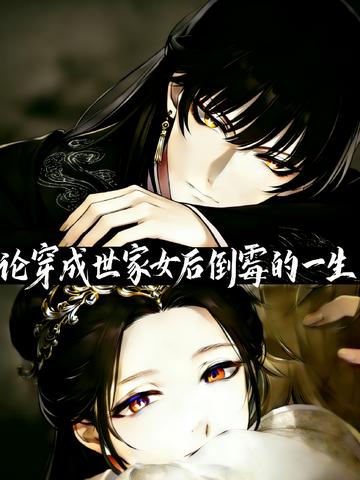
(Essentially, the whole story is about fighting against fate, but no one has a happy ending, but hey, resisting fate has nothing to do with the relationship between the male and female protagonists. The male protagonist is the incarnation of fate)
I am a daughter of an aristocratic family, and then I married an emperor who didn't love me, and I didn't love him either. But we had an agreement. It's really difficult to raise other people's children (?ω?). What a sin. The little kid doesn't look like him at all. He doesn't look like his father or his mother. I don't know who he looks like. A young girl likes to be a mother, woah woah woah, it's not like I don't have anyone to help me, but that snake is sleeping under the ground and refuses to be a widower with a baby. It starts with you and me. To me, it's just a point to you, right? Pray? (Raising children does not account for much in the Empress and Empress chapters, but it does exist, mainly when the heroine serves as the Queen Mother to assist the little emperor)
The heroine and the emperor have no emotional connection, and are only friends at best. Entering the palace is to clean up a friend's mess. The male protagonist has a bit of humanity, but not much of a god, and has a cultivation background. The heroine ties up a mad dog with an iron chain.
The male protagonist is a dog type, the kind of non-human being (essentially a snake) who would be happy if the female protagonist said to him such a puppy, a dog-snake.
One person is addicted to the past and does not want to wake up, one person is crazy about the present, which leads to bitter consequences, and the other person yearns for the future, but will never be free.
The one holding on the cover is the child of a foreign noble concubine, who is also the little prince. Qi wanted to kill the child, and the heroine was threatened to raise the child.