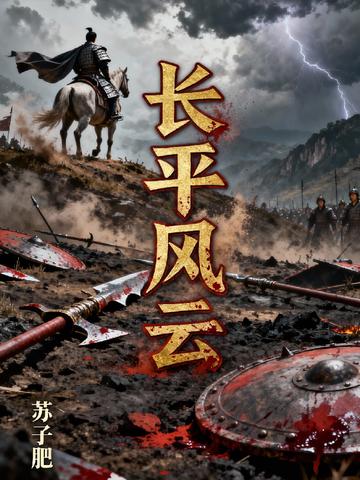
At the end of the Warring States Period, with the prairie fire ablaze, the ultimate showdown between Qin and Zhao for hegemony kicked off in Changping. With the power of Shang Yang's reforms, the Qin State used the strategy of "diplomacy far away and attack near" to cleverly seize the territory of Korea. The unexpected surrender of the seventeenth city of Shangdang pushed the two great powers into a deadly battlefield.
Lian Po built the fort for three years, relying on the natural danger of Danhe River and the Hundred Miles of Stone Great Wall to hold on, but he was jealous of King Zhao. Zhao Kuo relied on his familiarity with military literature and accepted orders in the face of danger, subverting the strategy of holding fast with the idea of "quick battle and quick decision". The power schemes of Xianyang Palace, the loyal admonitions of Handan City are difficult to implement, and the tempting enemies are deeply ambushed in Changping Valley, weaving a huge web that threatens the lives of 400,000 soldiers.
When the "god of war" Bai Qi secretly took charge of the Qin army and set up a trap to catch the turtle in the urn, the arrogance on paper could not match the ruthlessness of the battlefield. The Dan River was stained with blood, and the tragic song of surrender was a bloody battle that reshaped the pattern of the Warring States Period. It not only buried the elite of the Zhao Kingdom, but also sounded the death knell of the six kingdoms.
Machiavellianism and human nature are intertwined, loyalty and ignorance collide. This book restores the tragic truth of the Battle of Changping in an epic way, reveals the strategic game and historical inevitability behind "the entrapment of 400,000 surrendered soldiers", and takes you back to the troubled times where heroes appeared in large numbers and human lives were like grass, and witnessed how the prelude to the unification of the world began in blood.
A better book