"Red Flame Chang Geng" takes the Anti-Japanese War as the background, focusing on the war-torn lives of patriots Shen Yanqing and Su Wanqing, describing the intertwining of personal destiny and the destiny of the family and the country, interpreting the theme of "evil will be punished and justice will never be destroyed", as well as the belief of perseverance and reconstruction in peacetime.
Reader comments
"Red Flame Chang Geng" adheres to the narrative principle of "clear distinction between good and evil", but does not flatten the characters. The portraits of positive characters are three-dimensional and vivid. The protagonist is not a born hero, but has grown from an ignorant young man to a determined revolutionary in the flames of war. He has the timidity and confusion of ordinary people, but he chooses in the face of national justice. Come forward; the supporting characters each have their own character, including underground workers who sacrifice their lives for righteousness, country ladies who support the army, and intellectuals who join the army with their pens. Their sacrifice and dedication together build a flesh-and-blood Great Wall to resist foreign aggression. The creation of the villains is even more of a highlight. The work adheres to the principle of "the evildoers are not whitewashed". The cruelty, greed and hypocrisy of the Japanese and puppet invaders and traitor lackeys are deeply portrayed. Their evil deeds are not weakened, nor are they given any rights. The so-called "difficulties", from the atrocities of burning, killing and looting to the despicable betrayal of compatriots, each one directly points to the annihilation of humanity. This uncompromising opposition between good and evil not only conforms to the public's value expectations, but also highlights the justice and injustice of war.
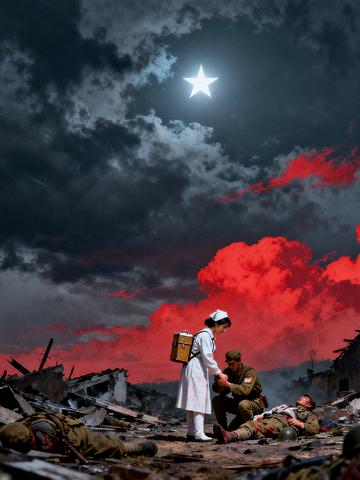
"Red Flame Chang Geng" adheres to the narrative principle of "clear distinction between good and evil", but does not flatten the characters. The portraits of positive characters are three-dimensional and vivid. The protagonist is not a born hero, but has grown from an ignorant young man to a determined revolutionary in the flames of war. He has the timidity and confusion of ordinary people, but he chooses in the face of national justice. Come forward; the supporting characters each have their own character, including underground workers who sacrifice their lives for righteousness, country ladies who support the army, and intellectuals who join the army with their pens. Their sacrifice and dedication together build a flesh-and-blood Great Wall to resist foreign aggression. The creation of the villains is even more of a highlight. The work adheres to the principle of "the evildoers are not whitewashed". The cruelty, greed and hypocrisy of the Japanese and puppet invaders and traitor lackeys are deeply portrayed. Their evil deeds are not weakened, nor are they given any rights. The so-called "difficulties", from the atrocities of burning, killing and looting to the despicable betrayal of compatriots, each one directly points to the annihilation of humanity. This uncompromising opposition between good and evil not only conforms to the public's value expectations, but also highlights the justice and injustice of war.