This book is not well written, don't read it
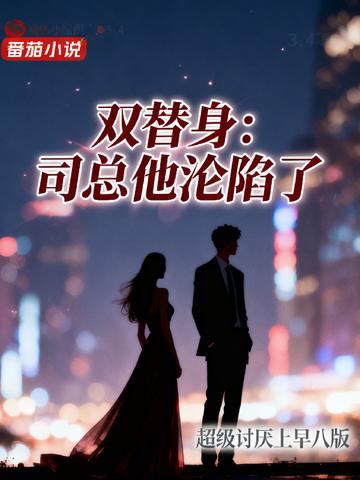
[Double stand-in + Marriage first, love later + Chasing his wife in the crematorium + Reunion after breaking up] sc he
[Black Lotus, soft on the outside and strong on the inside × Cold and abstinent controller]
Everyone knew that his new wife was very similar to Miss Wen who died young due to illness.
She just smiled faintly when she heard it.
No wonder, he always looked at her affectionately with his peach blossom eyes and touched her with utmost forbearance and restraint.
At the dinner party, the man in a suit and leather shoes with cold eyebrows sat lazily on the sofa, holding a cigarette between his slender fingers. He glanced at her casually and met her gaze.
Her breath froze, as if she saw the boy wearing a white shirt waiting for her to get out of school.
If he were still here, maybe it would look like this.
But this is not him. The young man does not know how to smoke or drink. He will always be the happy young man with his back to the sun and smiling at her.
But his life pressed the pause button at the age of eighteen.
When her gaze came into contact, the man's eyes stagnated slightly, and he put away his playful eyes.
Wearing a black short skirt, she slightly exposed her delicate collarbones, and her hair fell to her shoulders.
Young peach trees and plum trees, beautiful ladies.
It's so similar, but she's not her. She only wears a long white dress, has clear eyes, and always comforts him with a slight smile that everything is destiny.
After the dinner, the two families began to marry in a tacit understanding.
She is his substitute, and he is not her substitute.
The double substitute is salvation.
Reader comments
We are all in love, looking for our own shadow
I stayed up late to read this book, with thousands of words stuck in my heart.
In the first chapter, I was hit by a huge sadness.
It's not because Si Nian looked at Ruan Nian and thought of Wen Xi, but because Ruan Nian looked at Si Nian and seemed to see what Xu Huai would look like when he grew up.
"If he were still here, maybe he would look like this."
Just this sentence almost made me cry.
It turns out that the tragedy of a substitute is never one-way.
This is a two-way, sober sinking.
We all know that what the other person sees is not us, but we are both greedy for that familiar shadow, like a cluster of false flames to keep warm on a cold night.
I used to hate the female protagonists in the early stage of the stand-in novel. I thought they were too cowardly.
But Ruan Nian, I can't hate him.
I watched her try hard to act as a qualified Mrs. Si, and watched her unconsciously imitate Wen Xi's preferences.
Isn't this a metaphor for real life? In love, work and even family, how many times do we carefully hide our true selves and play a more "likable" role in order to be loved and recognized?
So, when she finally broke the porcelain doll and said, "Si Nian, I won't play this stand-in game anymore," I felt an unprecedented sense of relief!
That was not a Shuangwen-style slap in the face, but a tragic declaration of soul. What she smashed was the shell imposed on her by others, and it was also the cage forged by herself.
As for Si Nian, I can't simply define him as a scumbag.
Isn't he a prisoner trapped in the past? Is it love for Wen Xi? Or a heavy responsibility and irreparable guilt? He molded himself into an affectionate symbol, perhaps just to avoid facing the real, fragile and helpless self.
It wasn't until he lost Ruan Nian, the shadow he thought he was, that he realized that his world had collapsed.
When he chased his wife at the crematorium, he was not chasing a woman, but the real soul that he had lost, and a true love that he was only aware of.
What moved me most about this book was not the reunion of broken mirrors, but the reunion of broken mirrors.
Their love is not about repairing the original mirror image, but about completely shattering the mirror that reflects others and recasting a new mirror with their true selves.
In this mirror, what they finally saw was just each other.
Double doubles may be a common proposition.
Have we ever regarded our lovers as substitutes for ideal parents?
Have we ever lived our lives as a substitute for others' expectations?
Thanks to this story, it is like a gentle yet sharp scalpel, cutting through the self-deceptive parts of love.
It finally tells me:
True love is not about looking for someone else's shadow in you, but when we stand side by side, we finally see each other clearly and finally find ourselves.
This is not just a story about Ruan Nian and Si Nian.
This mirror also reflects you and me.
We are all in love, looking for our own shadow I stayed up late to read this book, with thousands of words stuck in my heart. In the first chapter, I was hit by a huge sadness. It's not because Si Nian looked at Ruan Nian and thought of Wen Xi, but because Ruan Nian looked at Si Nian and seemed to see what Xu Huai would look like when he grew up. "If he were still here, maybe he would look like this." Just this sentence almost made me cry. It turns out that the tragedy of a substitute is never one-way. This is a two-way, sober sinking. We all know that what the other person sees is not us, but we are both greedy for that familiar shadow, like a cluster of false flames to keep warm on a cold night. I used to hate the female protagonists in the early stage of the stand-in novel. I thought they were too cowardly. But Ruan Nian, I can't hate him. I watched her try hard to act as a qualified Mrs. Si, and watched her unconsciously imitate Wen Xi's preferences. Isn't this a metaphor for real life? In love, work and even family, how many times do we carefully hide our true selves and play a more "likable" role in order to be loved and recognized? So, when she finally broke the porcelain doll and said, "Si Nian, I won't play this stand-in game anymore," I felt an unprecedented sense of relief! That was not a Shuangwen-style slap in the face, but a tragic declaration of soul. What she smashed was the shell imposed on her by others, and it was also the cage forged by herself. As for Si Nian, I can't simply define him as a scumbag. Isn't he a prisoner trapped in the past? Is it love for Wen Xi? Or a heavy responsibility and irreparable guilt? He molded himself into an affectionate symbol, perhaps just to avoid facing the real, fragile and helpless self. It wasn't until he lost Ruan Nian, the shadow he thought he was, that he realized that his world had collapsed. When he chased his wife at the crematorium, he was not chasing a woman, but the real soul that he had lost, and a true love that he was only aware of. What moved me most about this book was not the reunion of broken mirrors, but the reunion of broken mirrors. Their love is not about repairing the original mirror image, but about completely shattering the mirror that reflects others and recasting a new mirror with their true selves. In this mirror, what they finally saw was just each other. Double doubles may be a common proposition. Have we ever regarded our lovers as substitutes for ideal parents? Have we ever lived our lives as a substitute for others' expectations? Thanks to this story, it is like a gentle yet sharp scalpel, cutting through the self-deceptive parts of love. It finally tells me: True love is not about looking for someone else's shadow in you, but when we stand side by side, we finally see each other clearly and finally find ourselves. This is not just a story about Ruan Nian and Si Nian. This mirror also reflects you and me.