If life is a game of chess, how will you make your move?
When five-year-old Chen Xiaojing’s father fell ill and was hospitalized from overwork, she too developed heart disease and depression. At that moment, it felt as if her world had come to a halt.
But then she met them:
Shen Lanting, a chess player with cerebral palsy: Her wheelchair is her battlefield, and beneath her trembling hand lies a razor-sharp mind that leaves nothing to chance. She tells me, “Jing, life is like chess. Once you make a move, there’s no taking it back.”
Lin Moran, a young Go player: Her board is the universe. She teaches me that true strength means knowing “victory is cause for joy, but defeat can be cause for joy too.”
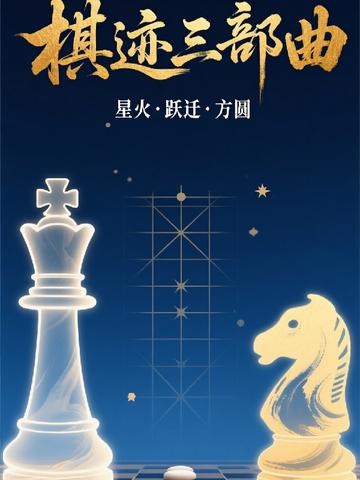
Volume One, “Sparks”: Between the 64 squares of chess and the Chu River and Han borders of Chinese chess, I struggle through illness, using chess pieces as medicine. With my closest friends beside me, I learn to walk again within the confines of a board.
Volume Two, “Leap”: In the world of lesser-known board games, I discover other possibilities along the path of chess. The tactical leaps of international draughts, the philosophy of promotion in shogi, the mysteries of Gomoku: every new exploration is a leap in life.
Volume Three, “The Circle and the Square”: Beneath the vast starry sky of Go, I finally understand that the end of the way of chess is learning to make peace with one’s own imperfections.
This is more than a story about board games. It is an epic about a group of children who have been “put in check by fate,” and how they use three boards as leverage to lift the weight of life and save one another. From the rational patterns of chess, to the imaginative wonders of lesser-known games, to the boundless philosophy of Go, every game is our gentle act of defiance against fate.